Wednesday, March 4, 2009
Thursday, February 26, 2009
Saturday, February 21, 2009
Sunday, February 8, 2009
Friday, February 6, 2009
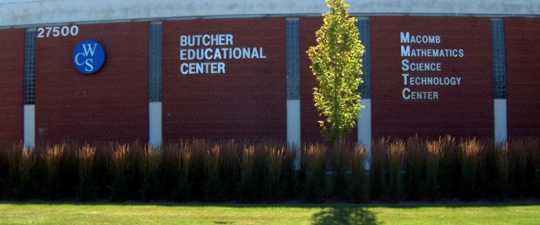
WCS MMSTC Renewable Energy Institute gets Governor Granholm's GREEN-STAMP of Approval!
Gov. Jennifer Granholm's call for a sharp increase in renewable energy production in Michigan is a real economic development opportunity, according to those in the industry.
"I think the renewable energy industry has been trying to grow and develop on its own, and with the support now of the governor, and as we are able to offer incentives, the public will come along," said Jennifer Alvarado, executive director of the Great Lakes Renewable Energy Association. "This is the strategy that the industry needs. I think the state will attract new businesses, especially those in large wind projects and those selling solar panels."
There should also be growth in renewable energy installation and maintenance companies.
The State of the State Address called on goals for 1,000 schools to reduce energy use and supplement electricity use with options like solar and wind electricity.
“By bringing renewable energy systems to our schools, we create an opportunity to educate an entire community and students about alternative energy options,” added Alvarado.
State officials already passed legislation last year that 10 percent of the state's electricity sold must come from renewable sources.
Tuesday, Granholm called for a “45 by '20” plan, for Michigan to pursue a 45 percent reduction in fossil fuel use for generating electricity by the year 2020. NextEnergy, the state's alternative energy accelerator, said Wednesday that Michigan spends $2 billion a year importing coal from other states and that coal supplies Michigan with 80 percent of the its electricity currently.
Rodger A. Kershner, an attorney at Howard & Howard in Royal Oak with a long practice in the energy industry, said that plan amounts to "a backwards way" of boosting that 10 percent of renewable power to 20 percent by 2020. Kershner said that with a new nuclear plant for Detroit Edison and a sharp increase in wind power, the 45 percent could be reached -- and in so doing, renewables boosted to 20 percent.
Will Granholm get the plan approved? "I don't know," Kershner said. "Industry won't like it. Republicans won't like it. But she has dressed it up in a 'This is the way out of our financial woes' clothing, and it is exciting."
Fellow Howard & Howard attorney Jon D. Kreucher said there's also movement toward a serious energy efficiency effort in state schools, and schools "seem to be pretty high value targets in terms of driving down demand by increasing efficiency."
NextEnergy released a statement Wednesday supporting Granholm’s proposal.
THINK: EduWood Digital Learning Studios!
The Oakland Press/TIM THOMPSON A building in the General Motors Centerpoint complex in Pontiac, which will be the site of a $70 million movie studio with nine sound stages.
Wednesday, February 4, 2009 11:40 AM EST
By CHARLES CRUMM and RANDAL YAKEY
Of The Oakland Press
Founders of a movie studio planned for Pontiac want to be making movies within 90 days. That’s a realistic goal, says county Executive L. Brooks Patterson.
The movie studio initiative was the high point of Patterson’s State of the County address Tuesday in Troy. Gov. Jennifer Granholm was supposed to make the same announcement at the same time in her State of the State address to the Legislature. Patterson blamed the governor for leaking news about the studio a day before the concurrent speeches. “The governor got so excited about the news — you remember she lived in Hollywood for awhile — she couldn’t contain her girlish enthusiasm and let the cat out of the bag,” Patterson said.
Patterson is among a halfdozen Republicans considering a run for governor when the term-limited Granholm leaves office in 2010.
But all agree the studio is certain to generate much-needed jobs.
“It’s good news — it’s going to be 3,600 jobs,” Patterson said Tuesday.
The local investors in the new studio are Oakland County developers A. Alfred Taubman, Gary Sakwa of Grand Sakwa Properties in Farmington Hills and Linden Nelson of Nelson Ventures in Birmingham. They’re teaming up with Raleigh Studios of Hollywood, Calif., and Endeavor Talent Agency of Beverly Hills, Calif.
“They’re the real deal,” state Rep. Tim Melton, D-Auburn Hills, said of Raleigh and Endeavor. Melton’s district includes Pontiac.
The Michigan Economic Growth Authority also is putting up money for the venture, the reason it was included in both Patterson and Granholm’s speeches.
The new venture, called Motown Motion Pictures LLC and currently based in Birmingham, will include both a film studio and production company.
The investors plan to spend $70 million for a 600,000-square-foot development, including nine sound stages located inside General Motors’ former Centerpoint truck plant at South Boulevard and Opdyke Road in Pontiac.
The state’s growth authority expects the studio to create 3,600 direct jobs and another 1,500 indirect jobs by the year 2020 with an average weekly wage of $824.
The authority on Tuesday approved a state tax credit valued at $101 million over 12 years. The project also will receive $12 million in state incentives along with job training assistance through the Michigan Economic Development Corporation.
Also receiving assistance from the authority are two other film industry businesses — one to be based in Plymouth and one in Detroit.
Michigan currently has the most favorable tax incentives for the film industry in the country.
Movie studio a definite among many ‘maybes’
Thursday, February 5, 2009 6:08 AM EST
By The Oakland Press
Amid all of the promises and glowing predictions we heard Tuesday night from both Gov. Jennifer Granholm and Oakland County Executive L. Brooks Patterson, there was at least one bit of very good, defi nite news.
In their state of the state and state of the county addresses, we were informed of the establishment of a movie studio in Pontiac. Motown Motion Pictures will invest $70 million to build its new film studios at a former General Motors plant.
Granholm noted that Pontiac’s studio was one of three projects coming to Michigan to boost its ongoing efforts to attract Hollywood filmmakers to the state. The governor noted that Wonderstruck Animation Studios will invest $86 million to build a new studio in Detroit and Stardock Systems, a digital gaming manufacturer, will build its production facilities in Plymouth.
The local investors in the Motown studio are Oakland County developers A. Alfred Taubman, Gary Sakwa of Grand Sakwa Properties in Farmington Hills and Linden Nelson of Nelson Ventures in Birmingham. They’re teaming up with Raleigh Studios of Hollywood, Calif., and Endeavor Talent Agency of Beverly Hills, Calif.
The Michigan Economic Growth Authority also is putting up money for the venture.
Motown Motion Pictures LLC is based in Birmingham and will include both a film studio and production company.
The investors plan to spend $70 million for a 600,000-square-foot development, including nine sound stages located inside General Motors’ former Centerpoint truck plant at South Boulevard and Opdyke Road in Pontiac.
The state’s growth authority expects the studio to create 3,600 direct jobs and another 1,500 indirect jobs by the year 2020 with an average weekly wage of $824.
The authority has approved a state tax credit valued at $101 million over 12 years. The project also will receive $12 million in state incentives along with job training assistance through the Michigan Economic Development Corporation.
However, tax revenue for Pontiac is expected to be anywhere from $1.4 to $2.8 million annually, according to city officials. The state expects its tax revenues to be $178 million by 2020.
Patterson even mentioned the county was in the early stages of its first-ever film festival, possibly coming in 2010.
In speeches that made a lot of promises, it was good hear about some real, concrete projects coming to Oakland County and the state.
We commend Patterson, Granholm, the Pontiac mayor’s office as well as other local and state officials for their efforts in securing this project.
Generally, Granholm painted a beautifully bright future for Michigan.
Of course, she had to do something positive because with the highest unemployment in the nation and an economy that is reeling, gloomy doesn’t even do justice as a description.
Meanwhile, Patterson also did some painting. As usual, he focused on the county’s accomplishments.
Patterson, among other things, noted that Automation Alley, on the strength of a 17-percent increase in membership last year, has hit the magical 1,000 membership mark. He also said that 106 Emerging Sectors companies have either located in Oakland County or expanded here over the past four years, resulting in $1.3 billion in new investment and the creation of 14,762 new jobs.
The picture Granholm crafted certainly sounded good. She plans to shrink state government and balance Michigan’s budget while creating more jobs through diversification of the state’s industries.
Obviously, the devil is in the details.
Will the state balance the budget through some type of tax increases on the backs of businesses and individuals? Will Granholm remember that whatever federal stimulus funds the state receives will be a one-time shot, so they need to supplement Michigan’s finances, not just prop them up for one more year. We certainly can’t argue with anything Granholm and Patterson said. We hope their visions come true.
But just how realistic are they? Historically, we would predict that Patterson’s projections are more accurate because Oakland County has continually led the way in fiscal responsibility and acumen.
Time will tell.
We’ll get a glimpse of Granholm’s plans to finance her visions when she presents her budget next week.
But no matter how successful Granholm and Patterson are in their programs, one thing is certain: For the time being, we’re all in for a bumpy ride, so hang on.
Monday, February 2, 2009
EDUCATION Going Green?
New Jersey Group Backs Brighton Firm's School Wind Energy Plan
The New Jersey Higher Education Partnership for Sustainability has signed a letter to President Barack Obama endorsing the Project EverGreen Schools program being promoted by Partners Green, a Brighton wind energy group.
Partners Green launched a petition that seeks a national energy policy consistent with President Obama's plan for renewable energy and education at our nation's schools. Partners Green has asked all parties to sign on to its “Letter to President Obama” before delivering the letter on Feb. 26.
“We welcome the opportunity to join Partners Green effort to raise awareness of this important issue and to inform our 47 New Jersey member higher education institutions," said John Cusack, executive director for the New Jersey partnership, adding that its membership "believes that the Project EverGreen Schools program effort should be an important and key part of the economic stimulus package of the new administration. The program meets higher education's need for renewable energy to reduce energy price volatility and reduce campus greenhouse gas emissions, creates clean sustainable jobs for the economy and our school's graduates, and helps colleges and universities fulfill their educational mission by having examples of renewable energy projects on their campuses for hands-on teaching purposes."
Project EverGreen involves installing vertical-axis wind turbines at school sites, both to produce green power and as a living energy laboratory on which students can work.
Said Kevin Cook, president of the Partners Green board: “The NJHEPS endorsement, along with many others across the country, of our 'Say Yes to Green Schools' petition and 'Letter to President Obama' is leading a groundswell of support for the Project EverGreen Schoold program."
For more information, contact Cusack at jcusack@njheps.org or visit www.cleangreenenergyllc.com.
Tuesday, January 27, 2009
NAISA 2009 EcoExperience Participants
Thanks,
Jim
Saturday, January 24, 2009
Real World: 21st Century Digital Learning Environments
| Learning Environments Must Break Through the Silos that Separate Learning from the Real World | |
ORLANDO, FL — Jan. 23, 2009 — Successful learning environments break through the barriers that separate schools from the real world, educators from each other and policymakers from the communities they serve. Yet, many schools continue to reflect their Industrial Age origins with rigid schedules, inflexible facilities and fixed boundaries between grades, disciplines and classrooms, according to a new paper released by the Partnership for 21st Century Skills and sponsored by Cisco Systems.
The paper, 21st Century Learning Environments, finds that learning environments – the structures, tools, and communities that inspire students and educators to attain the knowledge and skills that are required of them – must embrace a diverse and complex world of people, places, and ideas. While a tremendous amount of attention has been paid to standards, assessments, professional development, and curriculum and instruction, the paper finds that learning environments are an essential component to supporting positive 21st century outcomes for students.
The report notes that the term ‘learning environment’ has traditionally suggested a concrete place (schools, classrooms, libraries, etc.), but in today’s interconnected and technology-driven world, a learning environment can be virtual, online and remote. In addition, physical learning structures must be designed to suit the immediate and future requirements of a community and should enable collaboration, interaction and information sharing among community members.
While the relationship of physical spaces and technological systems to learning continues to be ever important, even more important is how – and whether – these environments support the positive human relationships that matter most to learning, according to the report. The most essential element of all learning environments has always been the ‘people network’ – the community of students, educators, parents, business and civic leaders, and policymakers that constitute the human resources of an education system.
“It is critical that 21st century learning environments address the multiple and interconnected needs of the whole child,” said Paige Kuni, worldwide manager of K-12 education for Intel Corporation and chair of the Partnership for 21st Century Skills. “Learning supports are only valuable if they effectively reinforce human relationships, give relevance to learning and encourage student engagement. Schools must devote themselves to more than the mind-body connection to ensure student achievement.”
Likewise, technology must go beyond merely supporting instruction to help foster personal connections to ensure students have the necessary foundations to become successful 21st century citizens. Toward that end, technology can enhance student learning and promote mastery of 21st century skills – learning and innovation skills, core subjects and 21st century themes, life and career skills and information, media and technology skills – by promoting greater student achievement, increasing student engagement, assessing student performance, facilitating communication and collaboration and maximizing administrative effectiveness.
The paper notes that the greatest challenge to incorporating technology into learning environments is not finding time and money, but finding ways to adequately support the use of these tools. Technology can only make a difference when students, teachers, and administrators are provided the necessary supports to proficiently integrate it into daily routines. Educational technology is most valuable when it functions as part of a thoughtfully orchestrated system that includes effective curriculum and instruction, ongoing professional development, authentic assessments and a positive learning culture.
“Schools are being designed for a new balance that combines the best of traditional classroom learning with leading 21st century learning methods and tools,” said Bernie Trilling, global director of education strategy and partnerships for the Oracle Education Foundation. “The learning environments of the 21st century will encompass a powerful mix of face-to-face learning opportunities with digital connections to bridge cultures and blend virtual and real-life relationships. At the same time, federal, state and local policies must help guide the creation of learning environments that serve all students in every corner of our states.”
With tight budgets and worries over the economy, policymakers face tough decisions concerning whether school design really makes a difference, notes the report. According to Georgetown University researchers, design has a bearing on achievement, as test scores can increase by up to 11 percent by improving a school’s physical environment. With that in mind, school design must also effectively address increasing enrollment, which is estimated to grow at record levels though 2013. This, in turn, signals that total spending on construction and maintenance could be as much as $30 billion annually. This is not an unprecedented occurrence – faced with similar demands a century ago, policymakers built thousands of schools that mimicked industrial forms to fulfill increased enrollment.
While, today, many schools have advanced well beyond those outdated models and classrooms have become undeniably more flexible, colorful and engaging, this is just an initial step, cautions the report. Successful learning environments must be able to adapt to the constantly evolving and ever-changing nature of technology, teaching and learning. One solution to achieve this necessary flexibility is to design learning environments that incorporate movable furniture and walls that can be made to conform to different class sizes and subjects.
"As important as it is for physical structures to be adaptable, it is even more important that class time be elastic. Instead of assigning a certain amount of time for teaching one subject per day, teachers need the flexibility of bigger and more adjustable time slots to truly impact learning," said Charles Fadel, global lead for education for Cisco Systems. "There must be a renewed focus on increasing the quality of teaching by providing teachers more time and opportunities to plan, collaborate and work with advanced technology systems."
In addition, schools cannot continue to use seat time as a measure of academic attainment. Rather, assessment of learning must include thoughtful measures of a student’s ability to apply and demonstrate knowledge in complex situations, the report concludes.
21st Century Skills Leadership States include: Arizona, Iowa, Kansas, Maine, Massachusetts, New Jersey, North Carolina, South Dakota, Wisconsin and West Virginia.
Friday, January 23, 2009
Windspire Update
Jim Bates
Southern Exposure
Renewable Energy Co.
TEAM Pickens moves Big Wind conversation to Congressional Districts across America!
Army!
President Obama's inauguration has kick started a frenzy of activity in Washington. With debate about the stimulus plan beginning to heat up, this is our chance to convince Congress that ending our dependence on foreign oil is essential for jumpstarting our economy.
To help you organize Pickens Plan efforts locally, we've created District Groups, one for each Congressional District in America.
Join your District Group today and connect with other Pickens Plan members who are making an impact in your Congressional District.
Together you will be able to:
- Sign Up New Members
- Place Op-Eds and Letters to the Editor in Local, State or National Newspapers
- Contact Your Members of Congress and ask them to Support the Pickens Plan
Getting Involved Locally is as Easy as 1-2-3-4!!Go to www.pickensplan.com/district-leaderboard.
Select your District Group from the list (or enter your zip code to find your group if you aren't sure which Congressional District you live in.)
Click on the "Join Group" link in the upper right corner of the District Group page (you may need to "sign up" and create a Push profile if you don't have one already).
Start organizing local Pickens Plan efforts to help end our dependence on foreign oil and create American jobs.
Have You Joined Your District Group Yet?
If Not, Click Here to Join.
Soon, Boone will call upon everyone in the army to do their part. In order for us to have a real impact on energy legislation in Washington, we have to be organized.
Join your District Group today and spread the word about the Pickens Plan in your community.
Now, more than ever, we need your help.
-Team Pickens
Thursday, January 22, 2009
NAIAS Education Day
BY CHASTITY PRATT DAWSEY • FREE PRESS EDUCATION WRITER • January 22, 2009
Eighth graders Ahris Carter and Jazzanea Williams of Detroit watched happily as their hydrogen-powered model car was the first to make the 10-meter trek to the finish line Wednesday during Education Day at the North American International Auto Show.
Three dozen students from Heilmann Park Middle School in Detroit and Lincoln Middle School in Pontiac tested their environmentally-friendly cars at the "Fuel Cell Challenge," sponsored by the Society of Automotive Engineers Foundation and the GM Foundation.
The schools were among 25 nationwide that participated in a pilot fuel cell program that might expand to about 200 schools nationwide. The program challenges students to build a car that travels up to 10 meters and is fueled by water.
Lionel Robertson, an eighth grader at Heilmann, taped an MP-4 player to his car so that it would play music. "I just wanted to do something different, he said.
Lincoln Middle School students Nichole Thompson, Jazzaman Mattingly, Luis Davila and Steven Loftin explained to Dan Hancock, vice president of GM Powertrain Global Engineering, how electrolysis separated the hydrogen and oxygen from a few drops of water to power their car.
"Tomorrow's solutions come from today's students," Hancock said.
Also at the auto show Wednesday, Secretary of State Terri Lynn Land, the Detroit Auto Dealers Association and others announced the second annual "Courageous Persuaders" contest. High school students produce 30-second videos to warn middle school students about the hazards of underage drinking and vie for scholarships of up to $3,000.
For information about the contest, visit: www.courageouspersuaders.com.
Contact CHASTITY PRATT DAWSEY at cpratt@freepress.com.Staff writers Matt Helms and Ben Schmitt contributed to this report.
Wednesday, January 21, 2009
Educational Technological Imperitive!
A Plea for Educational Technology
Four education leaders call on Congress to meet President-elect Obama's request to target classroom technology modernization in economic recovery legislation.
CoSN, ISTE, SIIA and SETDA have recommended that Congress agree to disseminate these new classroom technology grant funds through the existing Enhancing Education through Technology (EETT) program in order to ensure that the funds quickly reach the neediest schools and are used for their intended purposes.
"We're very encouraged by the economic stimulus proposal now under consideration," said Don Knezek, CEO of ISTE. "It puts a world-class, future-focused education front and center while also preserving and creating jobs now."
The four groups -- representing more than 100,000 educators and hundreds of high-tech employers -- believe that a major spending infusion on education technology will create jobs within the education, education services and technology sectors, as well as enable innovative instructional practices in America's classrooms to address the needs of today's digital-native students. For example, a federal expenditure of $9.9 billion could ensure that every classroom in economically-disadvantaged Title I schools is technology-rich.
Additionally, the groups noted that further investments in broadband would improve the nation's unemployment picture, citing a recent study by the Information Technology & Innovation Foundation that a $10 billion investment in broadband would lead to the creation of nearly one-half million jobs.
For the complete press release, please, click here.
Align in 2009?
| Tuesday, January 20, 2009 Automation Alley 2009 Global Trade Mission | |||
| TROY - Automation Alley is once again proud to host the Global Trade Mission with the Macomb Intermediate School District and Oakland Schools. The two-day event is an innovative business simulation program that prepares Southeast Michigan high school students for work in the global economy. With collaboration from business, education, and government, the GTM stands as a regional response to the challenges of the new economy. More than 200 students from Genesee, Macomb, Oakland, St. Clair and Wayne counties will learn skills for global citizenship; develop business solutions to trade challenges using the tools and information of the global marketplace; work hand-in-hand with business and trade experts; explore emerging careers in the region; and develop team skills to work effectively across diverse backgrounds. The GTM is scheduled for March 5-7, 2007 at Oakland Community College̢۪s Auburn Hills Campus and April 23-25 at Macomb Intermediate School District. Sponsorships are currently available and range from $250 - $2,500; volunteer opportunities are also available. For additional information, call Automation Alley̢۪s Resource Center at (800) 427-5100. | |||
Author: Staff Writer Source: MITechNews.Com |
Windspires Popping Up!
| Tuesday, January 20, 2009 Alternative Energy Windspire Installed In DC, Copemish | |||
| WASHINGTON – An alternative energy Windspire, which will soon be manufactured in Manistee, was visible by President Barack Obama from the steps of the Capitol that showcased Michigan made products to the world. The Windspire, developed by Nevada based Mariah Power will be manufactured in Manistee through a partnership with Mastech Technologies. Operations are expected to bring 120 new â€Å“green†jobs to Manistee over the next three years. The Windspire is a 30-foot vertical structure, which is maintenance free. The system will be tied to the electric grid, sending power back to the local utility company and resulting in a credit on the business owner’s electric utility bill and is elible for new federal tax credits. Devon O’Shea, an engineer for Contractor's Building Supply, also installed a Windspire Monday outside his company’s headquarters in Copemish, the second Windspire assembled in Michigan. The first Windspire was installed in December in St. Igance, in Michigan’s Upper Penisula. | |||
Author: Staff Writer Source: MITechNews.Com |


