Monday, January 5, 2009

Windspire Delivery Date and Time

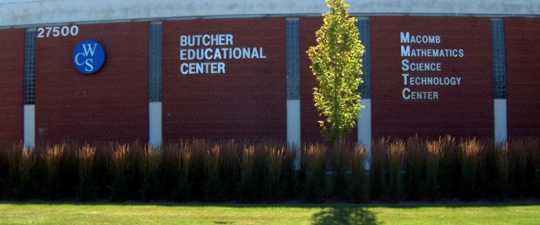
The Windspire Vertical Axis Wind Turbine is currently scheduled for delivery to MMSTC on Tuesday, January 6, 2009 between 11:00AM and 2:00PM

ImagiLearning: Are Virtual Worlds about to "Tip"

Are Virtual World technologies nearing a "tipping point" that might lead to some extensive new application and growth?

That's the suggestion of Andrew Lim, Sun Microsystems' Asia-Pacific director for government, education and healthcare, in a recent article from the Bangkok Post:

http://www.bangkokpost.com/011008_Database/01Oct2008_data70.php

According to John Jamison on a post to ImagiLearning:

"
While I'm not in the mood to panic at this point, the whole thing does lead me to think...

If virtual worlds are indeed about to "tip", and we will see the kinds of growth that many of us have predicted would eventually take place, are we as educators prepared to be a meaningful part of that growth? Are we mentally prepared to actually share our virtual environments with digital learners...I mean really share it...not just invite them in to participate in our planned learning activities?


Barr & Tagg fueled the thoughts years ago (1995) as they outlined the needs of a new, learning centered philosophy of education. Central to that was a redefinition of the roles of teacher and learner. While most all of us proudly describe ourselves as "learners" in Second Life...much of what we do here still comes from our role as "teacher". (http://critical.tamucc.edu/~blalock/readings/tch2learn.htm)

Ok, enough soapboxing. What do we need to do?

We need to reduce our focus on creating engaging learning experiences FOR students, and begin involving them in the actual creation of those experiences. Rather than our creating "immersive" displays, simulations, walk-throughs...whatever...we need to engage them in understand the concepts and objectives...and then partner with them to create in-world activities and experiences that allow them to demonstrate those concepts and objectives. Rather than their being the audience for our creations...let them be co-creators.

SIDE NOTE: To be fair, I don't blame any of us for getting caught-up in the creating, and designing, and building in virtual worlds. For most educators, Second Life has been the first experience in a virtual environment. Our digital learners have grown up in these immersive and creative game-based environments, and have felt the "flow" that is created for a long, long time. In fact, many of us educators may now apologize for our past grumbling when we read those reports of how many hours "kids" spend playing games...now that we are doing the same in our virtual worlds.

Back to the issue...

Digital learners are active participants, and want to be a part of the flow. No wonder many of them find little excitement in coming into a virtual world which still runs under the same philosophy as the classroom with chairs in rows. The new chairs are virtual...and in fact, may be clouds instead of chairs...but it all still feels the same. They are the audience...not the participant.

Yes...it will be a bit messier.
Yes...it will take us time to rethink and redevelop things.
Yes...it will look very different from how we would build it.
Yes...some of the stuff will make us cringe

But...if and when the "tip" arrives, we will be positioned to be active and meaningful participants in the new environments, rather than those sitting in groups around the edges...grumbling.

---
ImagiLearning is a community for those who can endure the shaking of all of their comfort levels, as we attempt to understand and join the new culture of learning."

Sunday, January 4, 2009

Digital Youth


"Kids' Informal Learning with Digital Media: An Ethnographic Investigation of Innovative Knowledge Cultures" is a three-year collaborative project funded by the John D. and Catherine T. MacArthur Foundation. Carried out by researchers at the University of Southern California and University of California, Berkeley, the digital youth project explores how kids use digital media in their everyday lives.

The Digital Youth Research Project has three general objectives.


The first objective is to describe kids as active innovators using digital media rather than as passive consumers of popular culture or academic knowledge.

The second objective is to think about the implications of kids' innovative cultures for schools and higher education and to engage in a dialogue with educational planners.

The third objective is to advise software designers about how to use kids' innovative approaches to knowledge and learning in building better software.

Funding Constraints could become CATALYST for Disruptive Digital Learning

Michigan school districts fear budget cuts

Declines in state revenue could create deficits

BY PEGGY WALSH-SARNECKI • FREE PRESS EDUCATION WRITER • January 4, 2009

The January revenue conference -- when lawmakers meet to begin deciding how much money the state will have for next year's budget -- has an ominous feel for many Michigan school administrators this year.

They gratefully accepted an early Christmas present from the state, when Gov. Jennifer Granholm announced that midyear budget cuts would not affect schools.

But with 54% of Michigan's districts holding less than the recommended 15% of their budget in savings, and about one third of the districts approaching dangerously low levels of savings, administrators will be nervously watching the conference -- which starts Jan. 9 -- and hoping there will be enough money in next year's budget to keep their programs going.

"The thing that really frightens me for the future is, where do we go next?" said David Houle, business manager for Willow Run Community Schools. "We're going to come to a point where there are no additional cuts you can make that don't impact in the classroom."

In these uncertain economic times, state revenues could be down between $500 million and $1 billion next year, according to Mitch Bean, director of the House Fiscal Agency.

At best, any drop in state revenue could mean school districts have to make cuts in anything from supplies to transportation. At worst, cuts in school revenues would drive some districts into a deficit.

"This is not an environment in which we expect to get anything," said Tom White, executive director of Michigan School Business Officials. "It's really a question of how difficult it's going to be and what we're going to do about it."

"There are so many unknowns, it's like playing with a whole deck of wild cards," White said. His organization is recommending school administrators plan for no increase in school funding next year.

The good news is that there may be more money available for schools because there are fewer students. Michigan lost about 5,000 pupils, saving about $40 million because school money is doled out on a per-pupil basis.

The bad news is that schools don't necessarily lose pupils in cost-saving ways. A district that loses 25 students is unlikely to lose them in the same classroom or even the same building. So expenses such as teachers, heating and transportation remain the same.

What could help? Strong Christmas sales generating more tax revenue, help for the U.S. automakers saving Michigan jobs or a timely federal economic stimulus package that could include a significant savings for Michigan in Medicaid.

"As soon as those sales in the state go down, we're not funding our schools," Houle said.

But even if these situations materialize, no one knows whether they will be enough. Most worried are those whose districts are likely to fall into a deficit if the state cuts any funding.

"It's the equivalent of squeezing blood out of a turnip," said Charles Muncatchy, superintendent of Mt. Clemens Community Schools. He said his district is out of savings, and the likely result of any funding cuts would be a deficit.

East Detroit Public Schools also would be likely to end up in a deficit if state funding is cut. The district is down to a slim $57,000 in savings.

"It's a mess," said Superintendent Bruce Kefgen. "I can't tell you where we'd ultimately cut."

The Willow Run Community Schools district already was in a deficit, and files an annual plan on how it is reducing its deficit with the state.

"We've already made major changes and concessions with our employees and staffing," Houle said. "We don't have anyplace to go for discretionary spending."

Even well-heeled districts can struggle.

Bloomfield Hills Public Schools has a cushion in the form of $20 million in savings, but its officials still feel that it has to close two schools next year.

"Just because we have a fund balance doesn't mean our board wants to tap it," said district spokeswoman Betsy Erikson.

Educators say if money is tight, it's only fair for the state and federal governments to chip in by dropping some of the schools' requirements.

"If you don't have the money for us, you could cut some of those unfunded mandates," said Kefgen. He suggests cutting back on the state testing programs such as the MEAP, which he said costs districts thousands of dollars to administer, or rethinking all the databases that districts are required to keep.

Muncatchy said he would like the federal government to fund some of the requirements under No Child Left Behind.

"I'm all for rigor and that schools should be places of excellence, but other countries in the world spend 30% of their federal funds on education, and America spends less than 3%," Muncatchy said.

Contact PEGGY WALSH-SARNECKI at 586-826-7262 or mmwalsh@freepress.com.

Disruptive Digital Learning equals Cheaper, Better, Faster

Waivers free high school students to study online, off-campus

State steps up role in Web-based high school education

BY LORI HIGGINS • FREE PRESS EDUCATION WRITER • January 4, 2009

Eleven Michigan school districts and one charter school can now allow students to take more courses -- and in some cases all of their classes -- online and off-campus, moves that could further cement the state's reputation as a leader in online education.

Michigan already broke new ground in 2006 by becoming the first state in the nation to require students take an online class or have an online educational experience in order to graduate.

Just in November, the Center for Digital Education ranked Michigan second, behind Florida, for online education.

Two metro Detroit districts -- Waterford and Avondale -- are among the handful moving farther ahead, winning approval from the Michigan Department of Education to allow larger numbers of students to take online courses wherever they want.

At least two dozen of the state's 552 districts and 230 charter schools have applied for the waivers from rules that require students be in a school building for nearly 1,100 hours each school year. Students also are currently limited by state law to taking only two online courses outside a school building during a semester.

"That would be so much easier," Kayla Jacques, 18, of Waterford said of the chance to take online courses from the comfort of home. She is a senior at Waterford Alternative High School and stays late after school several days a week to take an online class.

The waivers are a result of a challenge issued to districts earlier this year by State Superintendent Mike Flanagan, with the goal of seeing what innovative ideas school districts could come up with if they were allowed to bypass some rules that might be "standing in the way of schools reaching more kids," said MaryAlice Galloway, senior adviser to the chief academic officer at MDE.

Most of the 24 districts that submitted proposals targeted struggling students, particularly those attending alternative high schools. That's not surprising given that a quarter of the state's students fail to graduate on time, including 15% who drop out altogether.

Nearly all of the districts made online education a key component of the plans.

"It gives them a shot at catching up," said George Heitsch, Avondale superintendent.


Virtual enrollment boom

Online education has soared in Michigan in the last decade, illustrated by growth in enrollment at Michigan Virtual University, one of the options students have to take online classes. MVU offers more than 200 high school courses and enrollment has spiraled upward from 100 students in the 1999-2000 school year to an expected 15,000 this school year.

Part of the growth is influenced by students who need to make up credits required to graduate. But there also are students who want to take on larger course loads, those who want to take courses their schools don't offer and those with scheduling conflicts that prevent them from taking classes they want.

Most of those students who enroll at MVU, however, take one course at a time. The seat-time waivers will give students in districts that win approval an opportunity to take most or all of their course work online. And, in most cases, it allows them to take classes anywhere they can find an Internet connection.

That's what has Jacob Carman, 18, intrigued. A student at Waterford Alternative High School, he said being away from school would mean fewer distractions while he's learning. And there would be the convenience of not having to follow a school schedule.

The Avondale district, approved for a seat-time waiver last month, already has 10 students taking all of their classes online. Conor Helmrich, 16, is one of them.

"I'm able to wake up, turn my computer on and get going," Conor said. It's a lifestyle that has made him the envy of his friends. "They wish they could sleep in until whenever, and then do their work."

It may sound unstructured, and for the student who lacks inner motivation, online classes from home may not work. It helps that Conor's parents play an active role in his education. And the school closely monitors online students' progress and how often they log into the system.

"I got my parents all over my back on this," Conor said. "They're calling me like every hour making sure I'm on track."

No one is expecting hordes of students to sign up for a schedule in which they don't have to show up for school every day, if at all.

Jacques and her friend Katie VanOvermeer, 17, say they wouldn't want to take all of their classes online.

"I like coming to school here," Jacques said.

The Waterford district is beginning the program with alternative high students and those who are homebound for medical reasons. It will then expand it to its traditional high schools, said Lynn Kosinski, supervisor of secondary education.

But the district's plan includes limiting participants to 10% of the student body.


Trial program

The state is looking at the seat-time waivers as a pilot program and will closely monitor how well it works.

"What we're going to learn is not only which kids do well, but what kinds of support a district can give them to help them succeed in a virtual learning environment," Galloway said.

One thing they do know is that students taking online classes need support. Districts allowing students to take their course work online will assign a teacher mentor who regularly will meet face-to-face with them and monitor progress between meetings. Some districts also require students to take exams on a school site.

The Avondale district last spring piloted an afternoon program in which 12 students came into a computer lab and took all of their courses online. That program is still going on, but the seat-time waiver has opened it up to allowing up to 80 students to complete their course work outside of school.

Among the 10 students enrolled are four who would just rather not come to school. But there are others who have been expelled and can't come to school, said Chuck Granger, director of community education, adult education and the Avondale Academy, the district's alternative program.

Contact LORI HIGGINS at 248-351-3694 or lhiggins@freepress.com.

Friday, January 2, 2009

The National Energy Education Development Project (NEED)

The NEED Project
8408 Kao Circle, Manassas, Virginia 20110
Phone:703.257.1117
Fax:703.257.0037
info@need.org

Energy is a topic that continues to grow in importance as the global population faces energy challenges and opportunities. Today’s students must learn to apply energy technologies to use energy more efficiently, to lessen or eliminate environmental impacts of energy use, and to find new ways to use our energy sources more wisely and more economically.

The mission of the National Energy Education Development Project is to promote an energy conscious and educated society by creating effective networks of students, educators, business, government and community leaders to design and deliver objective, multi-sided energy education programs.

The NEED program includes engaging curriculum materials, exciting professional development, turnkey assessment and evaluation tools, and high quality teacher support. NEED’s long-term partnership with the U.S. Energy Information Administration provides the data and energy analysis used to update NEED curriculum materials on an annual basis. In addition, the partnership provides educational content for classroom curriculum materials and is the foundation for the EIA Kid’s Page and the popular Energy Ant. NEED believes in recognizing and rewarding excellence, and the Youth Awards Program for Energy Achievement showcases the work of teachers and students dedicated to teaching and learning about energy in all its aspects.

FRIDAY DELIVERY CANCELLED! (SORRY for the False Start)

Team

As far as I know the Windspire unit Never Left Toledo yet if their tracking system is working correctly.

I was told by a freight agent on Monday that the unit was being loaded then and would be in Detroit the same day.

They would call me to arrange a delivery date. This was why I talked with Mark Supal to find out if the students could be available on Friday if it could be delivered. They never called me and I didn't convey to anyone that they did.

Will call this morning as the terminals have been closed for two days.

I would suspect that the delivery will be Monday or Tuesday, will clarify.

Thanks,

Jim Bates

Thursday, January 1, 2009

Fit for Achievement!

Plan for schools fit for achievement, some say

Obama's program to modernize schools around the country could make big difference, educators say

BY LIBBY QUAID • ASSOCIATED PRESS • January 1, 2009

WASHINGTON -- Barack Obama probably cannot fix every leaky roof and busted boiler in the nation's schools. But educators say his sweeping school modernization program -- if he spends enough -- could jump-start student achievement.

More students than ever are crammed into aging, run-down schools that need about $255 billion in repairs, renovations or construction. While the president-elect is likely to ask Congress for only a fraction of that, education experts say it still could make a big difference.

"The need is definitely out there," said Robert Canavan, chairman of the Rebuild America's Schools coalition, which includes both teachers unions and large education groups. "A federal investment of that magnitude would really have a significant impact."

Obama is promising to give every student access to the Internet. Outgoing Education Secretary Margaret Spellings pointed out that billions already has been spent through the E-Rate program.

"We should never spend money in the public sector, especially in education, unless we're getting something for it, unless it's to some good end," Spellings said. "I commend him (Obama) for taking that on. That's another very ripe area. But not unless it's moving the needle for kids."

There's widespread agreement, however, that improving classrooms helps student performance.

Studies in Houston, New York City and North Dakota have made a link between classroom conditions and performance; in the New York study, researchers found students in crowded classrooms scored lower in math and reading.

Nearly half the principals in primary and secondary schools said deteriorating conditions are interfering with learning, according to the Education Department.

Judi Caddick, a middle school math teacher in Lansing, Ill., just south of Chicago, said in the older part of her World War II-era school, classrooms had just two power outlets, forcing teachers to string extension cords into the rafters or to unplug a TV power point presentation in order to plug in a computer for a child.

"It looked like a spaghetti bowl," Caddick said.

A new school is almost complete.

"It's a huge difference," Caddick said. "We don't have to have necessarily state-of-the-art and fluffy stuff. But at least when you don't have mold problems, and you don't have things that are broken, and you don't have an inability to use the technology, it's an investment."

Tuesday, December 30, 2008

ALL Hands and Minds ON DECK!

WINDSPIRE Verticle Axis Wind Turbine to ARRIVE Friday, January 2, 2009 8:00AM to 2:00PM (THANK YOU Mr. Klerkx for the date correction and time)

Happy New Year!

If you are planning on attending could you please "comment" on this post so that we can plan for food, etc. Food suggestions?

Saturday, December 27, 2008

WOW!

Rolf Oeser for The New York Times

Berthold Kaufmann and his wife, Dorte Feierabend, with their daughters in their "passive house" in Darmstadt, Germany.


December 27, 2008
The Energy Challenge

No Furnaces but Heat Aplenty in ‘Passive Houses’

DARMSTADT, Germany — From the outside, there is nothing unusual about the stylish new gray and orange row houses in the Kranichstein District, with wreaths on the doors and Christmas lights twinkling through a freezing drizzle. But these houses are part of a revolution in building design: There are no drafts, no cold tile floors, no snuggling under blankets until the furnace kicks in. There is, in fact, no furnace.

In Berthold Kaufmann’s home, there is, to be fair, one radiator for emergency backup in the living room — but it is not in use. Even on the coldest nights in central Germany, Mr. Kaufmann’s new “passive house” and others of this design get all the heat and hot water they need from the amount of energy that would be needed to run a hair dryer.

“You don’t think about temperature — the house just adjusts,” said Mr. Kaufmann, watching his 2-year-old daughter, dressed in a T-shirt, tuck into her sausage in the spacious living room, whose glass doors open to a patio. His new home uses about one-twentieth the heating energy of his parents’ home of roughly the same size, he said.

Architects in many countries, in attempts to meet new energy efficiency standards like the Leadership in Environmental and Energy Design standard in the United States, are designing homes with better insulation and high-efficiency appliances, as well as tapping into alternative sources of power, like solar panels and wind turbines.

The concept of the passive house, pioneered in this city of 140,000 outside Frankfurt, approaches the challenge from a different angle. Using ultrathick insulation and complex doors and windows, the architect engineers a home encased in an airtight shell, so that barely any heat escapes and barely any cold seeps in. That means a passive house can be warmed not only by the sun, but also by the heat from appliances and even from occupants’ bodies.

And in Germany, passive houses cost only about 5 to 7 percent more to build than conventional houses.

Decades ago, attempts at creating sealed solar-heated homes failed, because of stagnant air and mold. But new passive houses use an ingenious central ventilation system. The warm air going out passes side by side with clean, cold air coming in, exchanging heat with 90 percent efficiency.

“The myth before was that to be warm you had to have heating. Our goal is to create a warm house without energy demand,” said Wolfgang Hasper, an engineer at the Passivhaus Institut in Darmstadt. “This is not about wearing thick pullovers, turning the thermostat down and putting up with drafts. It’s about being comfortable with less energy input, and we do this by recycling heating.”

There are now an estimated 15,000 passive houses around the world, the vast majority built in the past few years in German-speaking countries or Scandinavia.

The first passive home was built here in 1991 by Wolfgang Feist, a local physicist, but diffusion of the idea was slowed by language. The courses and literature were mostly in German, and even now the components are mass-produced only in this part of the world.

The industry is thriving in Germany, however — for example, schools in Frankfurt are built with the technique.

Moreover, its popularity is spreading. The European Commission is promoting passive-house building, and the European Parliament has proposed that new buildings meet passive-house standards by 2011.

The United States Army, long a presence in this part of Germany, is considering passive-house barracks.

“Awareness is skyrocketing; it’s hard for us to keep up with requests,” Mr. Hasper said.

Nabih Tahan, a California architect who worked in Austria for 11 years, is completing one of the first passive houses in the United States for his family in Berkeley. He heads a group of 70 Bay Area architects and engineers working to encourage wider acceptance of the standards. “This is a recipe for energy that makes sense to people,” Mr. Tahan said. “Why not reuse this heat you get for free?”

Ironically, however, when California inspectors were examining the Berkeley home to determine whether it met “green” building codes (it did), he could not get credit for the heat exchanger, a device that is still uncommon in the United States. “When you think about passive-house standards, you start looking at buildings in a different way,” he said.

Buildings that are certified hermetically sealed may sound suffocating. (To meet the standard, a building must pass a “blow test” showing that it loses minimal air under pressure.) In fact, passive houses have plenty of windows — though far more face south than north — and all can be opened.

Inside, a passive home does have a slightly different gestalt from conventional houses, just as an electric car drives differently from its gas-using cousin. There is a kind of spaceship-like uniformity of air and temperature. The air from outside all goes through HEPA filters before entering the rooms. The cement floor of the basement isn’t cold. The walls and the air are basically the same temperature.

Look closer and there are technical differences: When the windows are swung open, you see their layers of glass and gas, as well as the elaborate seals around the edges. A small, grated duct near the ceiling in the living room brings in clean air. In the basement there is no furnace, but instead what looks like a giant Styrofoam cooler, containing the heat exchanger.

Passive houses need no human tinkering, but most architects put in a switch with three settings, which can be turned down for vacations, or up to circulate air for a party (though you can also just open the windows). “We’ve found it’s very important to people that they feel they can influence the system,” Mr. Hasper said.

The houses may be too radical for those who treasure an experience like drinking hot chocolate in a cold kitchen. But not for others. “I grew up in a great old house that was always 10 degrees too cold, so I knew I wanted to make something different,” said Georg W. Zielke, who built his first passive house here, for his family, in 2003 and now designs no other kinds of buildings.

In Germany the added construction costs of passive houses are modest and, because of their growing popularity and an ever larger array of attractive off-the-shelf components, are shrinking.

But the sophisticated windows and heat-exchange ventilation systems needed to make passive houses work properly are not readily available in the United States. So the construction of passive houses in the United States, at least initially, is likely to entail a higher price differential.

Moreover, the kinds of home construction popular in the United States are more difficult to adapt to the standard: residential buildings tend not to have built-in ventilation systems of any kind, and sliding windows are hard to seal.

Dr. Feist’s original passive house — a boxy white building with four apartments — looks like the science project that it was intended to be. But new passive houses come in many shapes and styles. The Passivhaus Institut, which he founded a decade ago, continues to conduct research, teaches architects, and tests homes to make sure they meet standards. It now has affiliates in Britain and the United States.

Still, there are challenges to broader adoption even in Europe.

Because a successful passive house requires the interplay of the building, the sun and the climate, architects need to be careful about site selection. Passive-house heating might not work in a shady valley in Switzerland, or on an urban street with no south-facing wall. Researchers are looking into whether the concept will work in warmer climates — where a heat exchanger could be used in reverse, to keep cool air in and warm air out.

And those who want passive-house mansions may be disappointed. Compact shapes are simpler to seal, while sprawling homes are difficult to insulate and heat.

Most passive houses allow about 500 square feet per person, a comfortable though not expansive living space. Mr. Hasper said people who wanted thousands of square feet per person should look for another design.

“Anyone who feels they need that much space to live,” he said, “well, that’s a different discussion.”

GIVE STUDENTS ALTERNATIVE ENERGY EDGE by DESIGN!

photo

St. Clair County students work on a solar-hydrogen fuel cell car. From left: Jason Hoogerhyde, John Freeman, Cody Benedict and Evan Miller. Rather than learning TV repair, students are getting trained in alternative energy.


Schools to invest in alternative energy, give students edge


BY PEGGY WALSH-SARNECKI • FREE PRESS EDUCATION WRITER • December 27, 2008

St. Clair County RESA Career Technical Center students will be calculating actual energy outputs from school-owned windmills, solar panels and a hydroelectric plant.

In Warren Consolidated Schools, students will find lessons from a district-owned wind power station integrated into their classes.

Both programs are the result of a trend by a growing number of schools to meld alternative energy into their lesson plans.

"I think kids are interested in this type of thing. And a lot of us see it as the future, to lessen our reliance on nonrenewable sources. And there are going to be jobs there," said Dan DeGrow, superintendent of St. Clair County Regional Educational Service Agency.

St. Clair RESA plans to invest up to $450,000, depending on how much grant money it receives, in three wind turbines -- each about 100 feet tall -- solar panels next to the turbines and a mini-hydro plant. It will be working with local governments on getting site permits.

Gone are the days of students taking high school electronics to become TV repairpeople. The jobs are moving to other categories, such as alternative energy technicians.

"What we decided was we wanted a way to teach traditional electronics but within a more current context," said Pat Yanik, director of career and technical education for RESA.

Beginning next fall, students will monitor the electricity generated by their three alternative energy sources, learn how to convert the power to actual energy and make decisions on how to distribute their self-generated electricity to RESA facilities. The actual energy generated will be small, but the lessons will be huge.

"With the energy crisis and the government push for it at the federal level and the state level, alternative energy seemed to be a pretty going item that students and parents can understand," said electronics teacher Zack Diatchun.

The Warren Consolidated Schools Board of Education has approved up to $9,000 for a wind spire -- a smaller (30-foot high) version of the windmill-style turbine -- to establish a district-wide alternative energy institute, said Superintendent Robert Livernois. Like St. Clair RESA, Warren Consolidated also hopes much of the cost will be offset by grants.

"The sky's the limit for us. That's what's so exciting about it from a K-12 perspective, you can talk to a second-grader and a 12th-grader," Livernois said. "Our belief is you've got to start somewhere, so as we launch this institute, it's really designed to begin cultivating awareness."

Students at St. Clair RESA have been told their program will open in the fall.

"It doesn't seem like something that they put into a high school-type course, but it's a really good idea they're putting it in," said Cody Benedict, 17, a senior from Yale High School who will be going to school for another year and taking the energy program. "It's going to be a larger range of stuff to learn for jobs."

There's no timetable for the Warren Consolidated program yet, but Livernois expects there will be varying components of alternative energy that will be applicable to most grades.

"We're going to use it in a study of just how much energy you can produce in the community," said Mark Supal, a technology teacher at the Macomb Mathematics Science and Technology Center, where the wind spire will be located.

Even students who won't be around for the new programs recognize the possibilities.

"I got accepted to Michigan Tech ... and I'm probably going to take electrical engineering, but I'm probably going to branch into some kind of alternative energy," said Dalton Pelc, 17, a senior from Kimball Township attending Port Huron High School. "That's what we need, and that's because that's what the economy needs."

Contact PEGGY WALSH-SARNECKI at 586-826-7262 or mmwalsh@freepress.com.

Saturday, December 20, 2008

21st Century Digital Learning Environments (Pedagogy)

21st Century Pedagogy

Even if you have a 21st Century classroom (flexible and adaptable); even if you are a 21st century teacher ; (an adaptor, a communicator, a leader and a learner, a visionary and a model, a collaborator and risk taker) even if your curriculum reflects the new paradigm and you have the facilities and resources that could enable 21st century learning - you will only be a 21st century teacher if how you teach changes as well. Your pedagogy must also change.


So what is 21st Century pedagogy?

Definition:
pedagogy - noun the profession, science, or theory of teaching.
Source: http://www.askoxford.com/concise_oed/pedagogy?view=uk

How we teach must reflect how our students learn. It must also reflect the world our students will move into. This is a world which is rapidly changing, connected, adapting and evolving. Our style and approach to teaching must emphasise the learning in the 21st century.

The key features of 21st Century Pedagogy are:
? building technological, information and media fluencies [Ian Jukes]
? Developing thinking skills
? making use of project based learning
? using problem solving as a teaching tool
? using 21st C assessments with timely, appropriate and detailed feedback and reflection
? It is collaborative in nature and uses enabling and empowering technologies
? It fosters Contextual learning bridging the disciplines and curriculum areas

Knowledge
Knowledge does not specifically appear in the above diagram. Does this mean that we do not teach content or knowledge? Of course not. While a goal we often hear is for our students to create knowledge, we must scaffold and support this constructivist process. The process was aptly describe in a recent presentation by Cisco on Education 3.0 [Michael Stevenson VP Global Education Cisco 2007]

We need to teach knowledge or content in context with the tasks and activities the students are undertaking. Our students respond well to real world problems. Our delivery of knowledge should scaffold the learning process and provide a foundation for activities. As we know from the learning pyramid content delivered without context or other activity has a low retention rate.

Image2


Image 3

Thinking skills
Thinking Skills are a key area. While much of the knowledge we teach may be obsolete within a few years, thinking skills acquired will remain with our students for their entire lives. Industrial age education has had a focus on Lower Order Thinking Skills. In Bloom's taxonomy the lower order thinking skills are the remembering and understanding aspects. 21st Century pedagogy focuses on the moving students from Lower Order Thinking Skills to Higher Order Thinking Skills.


Image 4

The 21st Century Teacher scaffolds the learning of students, building on a basis of knowledge recall and comprehension to use and apply skills; to analyse and evaluate process, outcomes and concequences, and to make, create and innovate. For each discipline in our secondary schools the process is subtly different.

Collaboration
The 21st century is an age of collaboration as well as the Information Age. 21st Century students, our digital natives, are collaborative. The growth of social networking tools, like bebo and myspace and the like, is fueled by Digital natives and Gen Y. The world, our students are graduating into is a collaborative one.

Collaborative projects such as Julie Lindsay's and Vicki Davis's Flatclassroom project and the Horizon Project, iearns and many others are brilliant examples of collaboration in the classrooms and beyond. These projects, based around tools like ning or wikis, provide students and staff a medium to build and share knowledge and develop understanding.

For example:

My own students are collaborating with students from three other schools, one in Brisbane, another in Qatar and a third in Vienna; on developing resources for a common assessment item. Collaboratively, they are constructing base knowledge on the technologies pertent to the topic. They are examining, evaluating and analysing the social and ethical impacts of the topic. But perhaps even more holistically they are being exposed to different interpretations, cultures and perspectives - Developing an international awareness which will be a key attribute in our global future.

URL: http://casestudy-itgs.wikispaces.com


Don Tapscott in Wikinomics, gives are many of examples of the business world adopting and succeeding by using global collaboration.

In a recent blog post from the Official google Blog, Google identified these as key traits or abilities in 1st Century Employees...

"... communication skills. Marshalling and understanding the available evidence isn't useful unless you can effectively communicate your conclusions."
"... team players. Virtually every project at Google is run by a small team. People need to work well together and perform up to the team's expectations. "

Source: http://googleblog.blogspot.com/2008/07/our-googley-advice-to-students-major-in.html

So to prepare our students, our teaching should also model collaboration. A vast array of collaborative tools are available to - wikis, classroom blogs, collaborative document tools,social networks, learning management systems - Many are available at no cost. If you have not yet tried them, look at:
? wikis - wet paint and wiki spaces
? Classroom blogs - edublogs, classroomblogmeister
? Collaborative document tools - Google documents, zoho documents
? Social Networks - ning
? learning managements systems - Moodle etc
These tools are enablers of collaboration, and therefore enablers of 21st century teaching and learning.

Collaboration is not a 21st century skill it is a 21st century essential.

If we look at UNESCO's publication "The four pillars of Education, Learning: The Treasure within" Collaboration is a key element of each of the four pillars.

  • Learning to know
  • Learning to do
  • Learning to live together
  • Learning to be

(http://www.unesco.org/delors/fourpil.htm)

Collaboration is not limited to the confines of the classroom. Students and teachers collaborate across the planet, and beyond the time constraints of the teaching day. Students work with other students regionally, nationally and globally. Learners seek and work with experts as required. This is 21st Century Collaboration

Real World, Inter-disciplinary & project based learning
21st Century students do not want abstract examples rather they focus on real world problems. They want what they learn in one subject to be relevant and applicable in another curriculum area. As teachers we need to extend our areas of expertise, collaborate with our teaching peers in other subjects and the learning in one discipline to learning in another.
Projects should bring together and reinforce learning across disciplines. The sum of the students learning will be greater than the individual aspects taught in isolation. This is a holistic overview of the education process which builds on and values every aspect of the 21st Century students education.


Image 5

Assessment
Assessment is still a key part of 21st Century Pedagogy. This generation of students responds well to clear goals and objectives, assessed in a transparent manner.

Students should be involved in all aspects of the assessment process. Students who are involved in setting and developing assessment criteria, marking and moderation will have a clearer understanding of:
? what they are meant to do,
? how they are meant to do it,
? why it is significant
? why it is important.
Such students will undoubtedly do better and use the assessment process as a part of their learning.

Students are often painfully honest about their own performance and that of their peers. They will, in a collaborative project, fairly assess those who contribute and those who don't.

This is their education, their learning and their future - they must be involved in it.

Linked to assessment is the importance of timely, appropriate, detailed and specific feedback. Feedback as a learning tool, is second only to the teaching of thinking skills [Michael Pohl]. As 21st Century teachers, we must provide and facilitate safe and appropriate feedback, developing an environment where students can safely and supportively be provided with and provide feedback. Students are often full of insight and may have as valid a perspective as we teachers do.

Fluency
What is fluency and why is it better than Literacy? Ian Jukes introduced this concept at NECC. He asserts that students need to move beyond literacy to fluency. They need to be
fluent in:
? The use of technology = technological fluency,
? Collecting, processing, manipulating and validating information = information fluency,
? using, selecting, viewing and manipulating media = media fluency,

What is fluency compared to literacy? A person who is fluent in a language does not need to think about speech, or reading rather it is an unconscious process of understanding. A person who is literate in the language must translate the speech or text. This applies to our students and their use of 21st century media. We need them to be unconsciously competent in the use and manipulation of media, technology and information.

The conscious competence model illustrates the difference between Literacy and Fluency. The person or student who is literate is in the conscious competence category. The person or student who is fluent is in the unconscious competence category.

Image 6

As educators, we must identify, develop and reinforce these skill sets until students become literate and then fluent..

Conclusion and the path forward.

To teach using 21st Century pedagogy, educators must be student centric. Our curricula and assessments must inclusive, interdisciplinary and contextual; based on real world examples.

Students must be key participants in the assessment process, intimate in it from start to finish, from establishing purpose and criteria, to assessing and moderating.
Educators must establish a safe environment for students to collaborate in but also to discuss, reflect and provide and receive feedback in.

We should make use of collaborative and project based learning, using enabling tools and technologies to facilitate this.

We must develop, in students, key fluencies and make use of higher order thinking skills. Our tasks, curricula, assessments and learning activities must be designed to build on the Lower Order Thinking Skills and to develop Higher Order Thinking Skills.

Image 7

Acknowledgements:
For being a brilliant critical friend, thanks for the advise and especially for the grammar - Marg McLeod.

By Andrew Churches

Arne Duncan Secretary of Education


Reform Starts Now: Obama Picks Arne Duncan

His secretary of education selection shows education is a priority.

by Grace Rubenstein
December 16, 2008

President-elect Barack Obama talked reform while announcing Chicago schools chief Arne Duncan as the next U.S. secretary of education.

"For Arne, school reform isn't just a theory in a book, it's the cause of his life," Obama said at Tuesday's press conference. Obama specifically mentioned pay-for-performance teacher salaries and charter-schools development as strategies with strong potential.

"If charter schools work, let's try that," Obama said. "Let's not be clouded by ideology when it comes to figuring out what helps our kids."

Duncan described his clear-eyed view of education in a June 2007 interview [1] with Edutopia when he said, "Quality public education is the civil rights issue of our generation."

Duncan, known for transforming underperforming schools and experimenting with new models, has a record as a pragmatist with a taste for innovations. His version of reform, judging by his record, centers on boosting teacher quality and supporting students with added services such as after-school programs. In the Chicago Public Schools [2], where 85 percent of the 400,000-plus students live below the poverty line, test scores, attendance, and teacher retention all went up during Duncan's seven-year tenure, while the dropout rate declined.

The Buzz
For weeks, pundits, educators, and education bloggers have speculated on what Obama's pick would show about his true beliefs on education.

"Arne Duncan has a type of personality that Obama seems to prefer, which is a pragmatist who will bring about change, but he'll do it in a way that will minimize confrontation in conflict," says Jack Jennings, president of the nonpartisan Center on Education Policy [3]. "He's brought about change in Chicago, but it hasn't been a head-on clash with the teachers' union. He's done it in a way that they all walk away from the table congratulating each other."

Supporters say Duncan has the right constitution for the job. On both substance and style, he has won praise from divergent interest groups, including the American Federation of Teachers [4] and the New York City-based Democrats for Education Reform [5].

Duncan shut down Chicago schools that performed poorly and reopened them with entirely new staffs. He started coaching and mentoring programs for teachers. He also supported a boom in new charter schools with diverse models, from military academies to single-sex schools, and piloted a program to pay teachers bonuses for top performance -- two controversial innovations Obama supports.

An Uncertain Future

Of course, an education secretary can't exactly dictate reform from on high. But he can use the bully pulpit to put a spotlight on certain problems and solutions, says Jennings, and hand out grants to support new innovations. He can also provoke change through regulations -- most notably those that guide implementation of the No Child Left Behind law.

On NCLB, Duncan is a middle-of-the-roader [6]; he supports the law's goals of high expectations and accountability but has challenged Congress to improve it by doubling its funding and amending it "to give schools, districts, and states the maximum amount of flexibility possible."

Not the least of Duncan's hurdles will be the nation's preoccupation with the economic crisis. In a sign of the media's interest in education, the first question at Obama and Duncan's press conference after the announcement of Duncan's nomination was about the Federal Reserve Bank lowering its interest rates.

The financial squeeze hitting schools could hinder Duncan's efforts.

Making money and resources key to success, Duncan and Obama both made the case for education by defining it as the path to prosperity; Obama called it the "single biggest determinant" of the economy's long-term health.

"We're not going to transform every school overnight," Obama said. "What we can expect is that each and every day, we are thinking of new, innovative ways to make the schools better. That is what Arne has done. That's going to be his job. That's going to be his task."

Grace Rubenstein is a staff writer and multimedia producer at Edutopia.

Monday, December 15, 2008

UPDATE: Renewable Energy JOBS!

Posted: Sunday, 14 December 2008 3:51PM

GLREA Annual Meeting Draws A Big Crowd

Michigan Public Service Commissioner Monica Martinez addressed over 100 attendees Saturday at the Great Lakes Renewable Energy Association’s Annual Meeting at the Detroit institute of Arts about the significance of Michigan’s first renewable portfolio standard, which requires all those selling electricity in Michigan to get 10 percent of it from renewable sources by 2015.

“Michigan’s renewable portfolio standard is a positive step that moves Michigan forward by boosting our economy," she said. "It helps diversify Michigan’s fuel mix, making it less dependent on foreign and fossil fuels, and helps jump-start the burgeoning alternative energy industry in Michigan, creating new jobs."

Key governmental officials were recognized by GLREA for their dedication to passing renewable energy standards in Michigan. GLREA Governmental Leadership Awards were presented to: State Reps. Jeff Mayes (D-Bay City) and David Palsrok (R-Manistee), Sen. Patty Birkholz (R-Saugatuck Township) and Gov. Jennifer Granholm.

“I am honored to be recognized for my work on the renewable energy package this past year," Mayes said. "I think we have positioned Michigan to take advantage of the manufacturing opportunities available in the renewable energy industry."

Said Palsrock: "Encouraging the renewable energy industry to thrive in Michigan is important for the future of our state and its residents, economically and environmentally. It was a privilege to work on such a crucial issue, and I look forward to seeing the successful results of our efforts in the years to come."

In her comments, GLREA executive director Jennifer Alvarado called 2008 "a pivotal year in Michigan’s progress towards the use of the renewable energy and creation of alternative energy jobs. GLREA is taking this opportunity to thank our partners, the state leaders and our members for their dedication to advancing renewable energy use.”

Other awards were announced. The GLREA Business Leadership Award: Jeff Metts of Dowding Industries, the GLREA Exemplary Project: City of Ann Arbor, the GLREA Individual Commitment Award: Brion Dickens, the GLREA Appreciation Award: Bob Pratt and Tanya Paslawski.

The GLREA Annual Meeting concluded with outgoing GLREA Board President, Tanya Paslwaski, announcing the appointment of 2009 officers, as follows: Howard Edelson, President; Diane Durance, Vice-President; Eric Schneidewind, Secretary; and Craig Weed, Treaurer.

GLREA is Michigan’s largest renewable energy organization, representing both businesses and residents.

GLREA reached over 6 million Michigan residents with news, facts and advertizing about the benefits of using renewable energy resources. The mission of the GLREA is to increase the mainstream use of renewable energy in Michigan and the Great Lakes region.

More at www.glrea.org.
© MMVIII WWJ Radio, All Rights Reserved.

Thursday, December 11, 2008

Student Meeting: Thursday, December 11, 2008


AGENDA

Nobody knows as much as Everybody

World Without Walls: Learning Well with Others

How to teach when learning is everywhere.

by Will Richardson

Four teachers from High Tech High.

Bringing Their A-Game:

Humanities teacher Spencer Pforsich, digital arts/sound production teacher Margaret Noble, humanities teacher Leily Abbassi, and math/science teacher Marc Shulman make lessons come alive on the High Tech campuses in San Diego.

Credit: David Julian

Earlier this year, as I was listening to a presentation by an eleven-year-old community volunteer and blogger named Laura Stockman about the service projects she carries out in her hometown outside Buffalo, New York, an audience member asked where she got her ideas for her good work.

Her response blew me away. "I ask my readers," she said. I doubt anyone in the room could have guessed that answer. But if you look at the Clustrmap on Laura's blog, Twenty Five Days to Make a Difference, you'll see that Laura's readers -- each represented by a little red dot -- come from all over the world. She has a network of connections, people from almost every continent and country, who share their own stories of service or volunteer to assist Laura in her work. She's sharing and learning and collaborating in ways that were unheard of just a few years ago.

Welcome to the Collaboration Age, where even the youngest among us are on the Web, tapping into what are without question some of the most transformative connecting technologies the world has ever seen. These tools are allowing us not only to mine the wisdom and experiences of the more than one billion people now online but also to connect with them to further our understanding of the global experience and do good work together. These tools are fast changing, decidedly social, and rich with powerful learning opportunities for us all, if we can figure out how to leverage their potential.

For educators and the schools in which they teach, the challenges of this moment are significant. Our ability to learn whatever we want, whenever we want, from whomever we want is rendering the linear, age-grouped, teacher-guided curriculum less and less relevant. Experts are at our fingertips, through our keyboards or cell phones, if we know how to find and connect to them. Content and information are everywhere, not just in textbooks. And the work we create and publish is assessed by the value it brings to the people who read it, reply to it, and remix it. Much of what our students learn from us is unlearned once they leave us; paper is not the best way to share our work, facts and truths are constantly changing, and working together is becoming the norm, not the exception.

The Collaboration Age is about learning with a decidedly different group of "others," people whom we may not know and may never meet, but who share our passions and interests and are willing to invest in exploring them together. It's about being able to form safe, effective networks and communities around those explorations, trust and be trusted in the process, and contribute to the conversations and co-creations that grow from them. It's about working together to create our own curricula, texts, and classrooms built around deep inquiry into the defining questions of the group. It's about solving problems together and sharing the knowledge we've gained with wide audiences.

Connection Meets Content

Inherent in the collaborative process is a new way of thinking about teaching and learning. We must find our own teachers, and they must find us. In fact, in my own kids' lives, I believe their best, most memorable, and most effective teachers will be the ones they discover, not the ones they are given. That's no slight against the people in their face-to-face classrooms, who are equally important in a connected world. But it does suggest that we as educators need to reconsider our roles in students' lives, to think of ourselves as connectors first and content experts second.

As connectors, we provide the chance for kids to get better at learning from one another. Examples of this kind of schooling are hard to find so far, but they do exist. Manitoba, Canada, teacher Clarence Fisher and Van Nuys, California, administrator Barbara Barreda do it through their thinwalls project, in which middle school students connect almost daily through blogs, wikis, Skype, instant messaging, and other tools to discuss literature and current events. In Webster, New York, students on the Stream Team, at Klem Road South Elementary School, investigate the health of local streams and then use digital tools to share data and exchange ideas about stewardship with kids from other schools in the Great Lakes area and in California. More than learning content, the emphasis of these projects is on using the Web's social-networking tools to teach global collaboration and communication, allowing students to create their own networks in the process.

We must also expand our ability to think critically about the deluge of information now being produced by millions of amateur authors without traditional editors and researchers as gatekeepers. In fact, we need to rely on trusted members of our personal networks to help sift through the sea of stuff, locating and sharing with us the most relevant, interesting, useful bits. And we have to work together to organize it all, as long-held taxonomies of knowledge give way to a highly personalized information environment.

That means that as teachers, we must begin to model our own editorial skills -- how we locate and discern good information and good partners -- at every turn, in every class, reflecting with students on our successes and failures. The complexities of editing information online cannot be sequestered and taught in a six-week unit. This has to be the way we do our work each day.

Collaboration in these times requires our students to be able to seek out and connect with learning partners, in the process perhaps navigating cultures, time zones, and technologies. It requires that they have a vetting process for those they come into contact with: Who is this person? What are her passions? What are her credentials? What can I learn from her?

Likewise, we must make sure that others can locate and vet us. The process of collaboration begins with our willingness to share our work and our passions publicly -- a frontier that traditional schools have rarely crossed. As Clay Shirky writes in Here Comes Everybody: The Power of Organizing Without Organizations, "knowingly sharing your work with others is the simplest way to take advantage of the new social tools." Educators can help students open these doors by deliberately involving outsiders in class work early on -- not just showcasing a finished product at the spring open house night.

Fortunately, social tools like wikis, blogs, and social-bookmarking sites make working with others across time and space easier than it's ever been. They are indeed "weapons of mass collaboration," as author Donald Tapscott calls them. We no longer have to be present to participate. Look no further than Wikipedia to see the potential; say what you will of its veracity, no one can deny that it represents the incredible potential of working with others online for a common purpose.

Opportunity Cost

A plastic human showing organs.

Biotechnology teacher Jay Vavra uses this figure for hands-on anatomy lessons.

Credit: David Julian

As Wikipedia so wonderfully shows, while the tools make virtual work easier, navigating these work spaces is far from simple. We can use Delicious to organize our collective research, Google Docs to write together, and Skype to videoconference when necessary, but technical know-how is not enough. We must also be adept at negotiating, planning, and nurturing the conversation with others we may know little about -- not to mention maintaining a healthy balance between our face-to-face and virtual lives (another dance for which kids sorely need coaching).

The Collaboration Age comes with challenges that often cause concern and fear. How do we manage our digital footprints, or our identities, in a world where we are a Google search away from both partners and predators? What are the ethics of co-creation when the nuances of copyright and intellectual property become grayer each day? When connecting and publishing are so easy, and so much of what we see is amateurish and inane, how do we ensure that what we create with others is of high quality?

At this moment, there are no easy answers for educators; most of the school districts I visit still have not begun to contextualize or embrace these shifts. Instead, as illustrated by the Canadian college student who faced expulsion for "cheating" after creating a study group to share notes on Facebook rather than face to face in the library, many of our students continue to explore the potentials and pitfalls of instant communication with little guidance from their teachers. The technologies we block in their classrooms flourish in their bedrooms. Students are growing networks without us, writing Harry Potter narratives together at FanFiction.net, or trading skateboarding videos on YouTube. At school, we disconnect them not only from the technology but also from their passion and those who share it.

In our zeal to hold on to the old structures of teaching and learning and to protect students at all costs, we are not just leaving them ill prepared for the future, we are also missing an enormous opportunity for ourselves as learners. Regardless of the limits of technology or the culture of fear in our workplaces, almost every teacher I meet now has the ability to tap into these shifts in their personal practice should they choose to. They could start by browsing Classroom20.com or searching blogsearch.google.com for bloggers who share their interests. Anyone with a passion for something can connect to others with that same passion -- and begin to co-create and colearn the same way many of our students already do.

I believe that is what educators must do now. We must engage with these new technologies and their potential to expand our own understanding and methods in this vastly different landscape. We must know for ourselves how to create, grow, and navigate these collaborative spaces in safe, effective, and ethical ways. And we must be able to model those shifts for our students and counsel them effectively when they run across problems with these tools.

Anything less is unacceptable for our kids, for my kids, for the Laura Stockmans of the world, who so far have been relegated to learning how to add dots to their maps on their own. The good news, for those willing to accept the challenge, is that we don't have to do it alone.

Will Richardson is author of the blog weblogged, learner in chief at the Connective Learning Group, cofounder of Powerful Learning Practice, and a member of The George Lucas Educational Foundation's National Advisory Council.

This article was also published in the December 2008 issue of Edutopia magazine.

Wednesday, December 10, 2008

You Tube Challenge (Ditco)

School of the Future World Summit 2008

Evan Arthur - The Australian Digital Education Revolution

Martin Bean - What Technology Makes Possible

Randy Fielding - Design for the Creative Age - Part 1 (slides 1-49)

Randy Fielding - Design for the Creative Age - Part 2 (slides 50-75)

Randy Fielding - Design for the Creative Age - Part 3 (slides 76 - end)

Julio Fontan - Country Spotlight: Colombia

James Grant & Lee Burley - Building Schools for the Future

Bill Hill - The Digital Renaissance Age

Michael Horn - Disrupting Class

Allyson Knox - Career Forward

Victor McNair - Teacher E-Portfolios

Katrina Reynen - Innovation that Drives Transformation Across School Systems

Don Richardson - Innovation Management

Ratnasingam Selvarani & Angeline Fern - Transformational Learning - Part 1

Ratnasingam Selvarani & Angeline Fern - Transformational Learning - Part 2

Yasutaka Shimizu - NEXT Project - Part 1

Yasutaka Shimizu - NEXT Project - Part 2

Jaeshin Song - e-Learning of Korea

Wim Veen - Homo Zappiens: New Learning Strategies in a Digital Age

Tony Wagner - The Global Achievement Gap

Governor Granholm Supports "Green Jobs"

Granholm to talk energy with Obama team

Tuesday, December 9, 2008 3:54 PM EST

LANSING (AP) — Michigan Gov. Jennifer Granholm is traveling to Washington to talk about energy issues with members of President-elect Barack Obama’s transition team.

Granholm is being mentioned as a potential pick to be the next energy secretary. But her spokeswoman says the Democratic governor isn’t going to Washington Wednesday for a job interview.

Instead, Granholm will talk up Michigan as a place to create new energy jobs.

Obama has pledged to use part of his proposed economic stimulus package to develop alternative energies and “green” technologies.

The governor will be joined by her top energy advisers.Granholm also plans to meet with Michigan’s congressional delegation to discuss government loans for the domestic auto industry and a stimulus package.