Friday, March 20, 2009

Mariah Wind Power & MasTech Manufacturing Celebration April 20, 2009 Manistee, Michigan (Fieldtrip?)

mp header

March2009 Newsletter: Volume Manufacturing, School Install, WINDPOWER 2009


Windspire Logo l

Windspire®
PROUD TO BE MADE IN USA

Not on our mailing list?
Sign-up today to make sure you receive the latest news about Windspire from Mariah Power
Click Here!


You're Invited! Windspire Manufacturing Grand Opening April 20, 2009
Manistee Invite
You are cordially invited to attend the grand opening celebration of the Manistee, Michigan manufacturing facility at 1pm on Monday, April 20, 2009. Governor Granholm will raise a Windspire in honor of the event and public tours of the facility will be available to attendees. For more information please email marketing@mariahpower.com


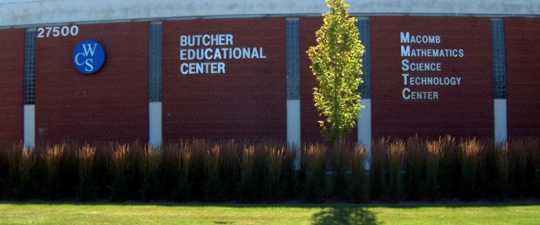
Students at Michigan's Warren Consolidated Schools' Macomb Mathematics Science Technology Center and Career Preparation Center broke ground March 16 on the location for the first Windspire wind turbine at a K-12 public school in Michigan - at Butcher Educational Center in Warren. The students will incorporate the Windspire into an educational program to track performance of the Windspire and learn how renewable energy can lessen their impact on global warming.


Press Release ~~~~~~~~~~~~~~~~~~~~~~~~~~~~~~~~~~~~~~~~~~~~~~~~~~~~~~~~~~~~~~~~~~~~~~~~~~~~~~MARIAH POWER, WIND TECHNOLOGY PRODUCER OF WINDSPIRE® WIND TURBINES, ANNOUNCES COMPLETION OF 100 UNIT FIELD PROGRAM

Program Results in Substantial Enhancements to Vertical Axis Wind Turbinein Preparation for Volume Manufacturing

RENO, Nevada, (March 18, 2009 )-Mariah Power, a wind technology company and producer of Windspire vertical axis wind turbines, today announced the conclusion of its 100 Unit Field Program which closely monitored the performance of 100 Windspire wind turbines in a variety of installation locations across the country.

The Unit Field Program, that has been taking place since June 2008, led to several enhancements of the Windspire wind turbine. The product upgrades increase quality and reduce cost per unit of the wind turbine prior to its volume manufacturing at MasTech Manufacturing in Manistee, Michigan, scheduled to begin later this month.

Improvements to the Windspire wind turbine focused on increasing its longevity and rectifying design problems found with initial units, as well as upgrading exterior finish products.

The Windspire inverter has also undergone several design upgrades, designed to maximize reliability and power output and solidify safety features. All existing Windspires will be retrofitted with this version free of charge once complete.

For specific information on the various upgrades, please visit www.mariahpower.com/upgrades.

"We have always been committed to testing our technology in order to get the best possible product to market," said Mike Hess, CEO of Mariah Power, "The 100 Unit Field Program brought issues to our attention that needed to be addressed, and as a result, we have made major upgrades to our Windspire units, which mean a better product for our customers. We continue to see the value in conducting ongoing testing and are therefore maintaining existing programs while we seek to expand our formal test program.

" Partnering with MasTech Manufacturing, Mariah Power has also made improvements to the quality of manufacturing to consistently deliver product at or exceeding specifications in the volume manufacturing setting. To ensure quality control during the transition from design into manufacturing, Mariah Power has adopted an ERP system, a CAM system for direct conversion of CAD designs to machine language, and a barcode system that identifies correct part number and revision level to validate inventory versus design match.

Mariah Power continues with formal testing at Windward Engineering in Utah and is in the process of securing other independent test sites, including the North Carolina Small Wind Energy Research and Demonstration Site at Appalachian State University. Mariah Power has also started ICC (International Code Council) testing of the Windspire.

All new upgrades are available to customers at no cost to them through Mariah Power dealers. A 5-year limited warranty is included with the purchase of all Windspires.

"Mariah Power is committed to selling quality wind turbines. Providing free upgrades to early customers, very simply, makes good business sense," continued Hess.

About Mariah PowerBased in Reno, Nevada, Mariah Power provides low-cost, low-noise, attractive wind power appliances for use with residential, business, and commercial buildings.

The company's patented technology maximizes energy conversion from wind into electric power, regardless of changing wind speed and direction. The company's first vertical axis Windspire® wind turbine, is manufactured in the U.S. and is now available for shipment.

For more information, visit http://www.mariahpower.com/.

Packing Their B(r)ags!


I believe CONGRATULATIONS are in order in that Ms. Lyndsey Reich and Mr. Tamim Shaker have recently won the Detroit Science and Engineering Fair / Team Competition 2009. They will be traveling to Reno, Nevada in May to compete and extend their winning ways. Kudos!

*Can't remember who we know in Reno..........ten-point toss-up to anyone?

Thursday, March 19, 2009

MPSC / Update

Posted: Wednesday, 18 March 2009 6:44PM

MPSC Establishes Statewide Net Metering Program, Approves Revised Rules

The Michigan Public Service Commission Wednesday established a statewide net metering program, required by Public Act 295 of 2008, also known as the Clean, Renewable and Efficient Energy Act. The Commission also approved electric interconnection and net metering rules.

Net metering occurs when customers with renewable energy generators produce electricity in excess of their needs, providing power back to the serving utility and receiving a credit for power they supply to the system. It is anticipated that most net metering customers will be using wind or solar generation equipment.

“The new statewide net metering program means residential and business customers can add small renewable energy electric generation projects onsite and get credited for the energy they produce in excess of their needs -- at the full retail rate,” noted MPSC Chairman Orjiakor Isiogu. “As a result, my fellow Commissioners and I expect the number of net metering customers to skyrocket.”

The MPSC on March 3 held a public hearing to provide people with an opportunity to comment on the proposed rules that govern net metering an interconnection. Based on those comments, the MPSC made minor changes to clarify the meaning of the rules.

The approved rules:

* Classify interconnection projects into different categories to reflect the level of complexity of projects according to their size.
* Direct utilities to designate an initial point of contact for customer inquiries about interconnection and net metering, and alternative electric suppliers must designate a point of contact for inquiries about net metering; and direct applicants to designate a contact person who can respond to technical issues or questions from the utility.
* Add an alternative dispute resolution process to resolve conflicts that may arise.
* Provide for the appointment, if necessary, of one to three independent experts by the MPSC to review any technical, cost or timing issues, if a complaint is filed.
* Provide clear time limits for completion of reviews and studies, if necessary, that are based on the size and complexity of the project.
* Provide for re-application when an applicant for interconnection makes a material modification to an approved project.
* Require no additional insurance for the smallest projects (up to 150 kW) and do not require that the utility be named as an additional insured party. For larger systems, a minimum $1 million general liability policy would be obtained by the applicant.
* Provide for disconnection in certain circumstances
* Provide that the applicant would be responsible for the costs of securing any easements or rights-of-way that might be required for interconnection.
* Provide that the size of net metering generators be limited to meet the applicant’s electric needs
* Provide for the transfer of current net metering customers to the new net metering program within 30 days of the rules’ effective date
* Establish net metering equipment requirements and grandfather existing equipment that is already properly interconnected.
* Provide for the measurement of monthly net usage with the customer’s existing meter, if it is capable of measuring the flow of energy in both directions for net metering customers with generators that are 20 kW or less
* Establish billing and crediting procedures for net metering customers.
* Provide for the crediting at the full retail rate for true net metering customers.
* Provides for modified net metering for renewable generators up to 150 kW and methane digesters up to 550 kW.
* Provide for penalties for violations of rules.

The approved revised rules now go to the Legislative Service Bureau and the State Office of Administrative Hearings and Rules for certification as soon as possible. The Commission is seeking a waiver of the 15 days required to expire before certification by the Joint Commission on Administrative Rules. That waiver would allow the rules to take effect no later than April 4.

Once final approval is granted for the rules, Michigan electric utilities, including investor-owned, regulated cooperatives, and alternative electric suppliers, will offer their customers a net metering program.

Wednesday, March 18, 2009

Renewable Energy Institute (Begins)

Macomb Global Trade Mission 2009

Meeting: Macomb Community College (Peter Klein, Associate Dean Engineering Technology)

GREEN Jobs!

Posted: Tuesday, 17 March 2009 5:05PM

Michigan Entrepreneurs Have Big Plans For Wind Power

Two Michigan entrepreneurs say they plan to begin putting thousands of people to work in the wind energy industry this summer.
Global Wind Systems Inc. says it will employ 300 at its Novi assembly operations by this fall, building the central hubs of huge 1.5 megawatt wind turbines. CEO Chris Long likens the hubs to “70-ton school buses” in shape and size.
Meanwhile, Gilbert Borman and his Borman Holdings LLC hope to act as a supplier of gears to Global Wind Systems.
The dirty little secret of today’s rapidly growing American wind power industry is that virtually all of its hardware is imported from Europe, which has been pursuing wind power for 30 years now. Long and Borman aim to change that, with the enthusiastic support of state officials like Stanley “Skip” Pruss, director and chief energy officer of the state Department of Energy, Labor and Economic Growth.
Long said Michigan’s long legacy manufacturing expertise gives it substantial advantages in wind turbine manufacturing, and global demand is astounding.
Long said current industry figures show a global market for one 1.5 megawatt wind turbine to be built every 20 minutes, but the industry today builds only one every four and a half hours. Customers can wait three or more years for delivery even after they’re paid in full. And small projects like the city of Wyandotte’s proposed five-turbine layout can’t get any manufacturer interested in building for them.
“It’s the greatest industrial opportunity since Henry Ford,” Borman said.
Each wind generator runs $2.5 million to $3 million. So “if we can ramp up and produce a couple thousand of these a year” in Michigan, Borman said, “it’s the equivalent of Chrysler Corp.” in terms of economic impact.
And it’s no flash in the pan. Borman, Pruss and Long said there will be demand for hundreds of thousands of wind units a year for the foreseeable future.
Borman and Long said a nonprofit is being established, the Michigan Wind Institute, to coordinate the state’s wind energy efforts among industry, academia, the nonprofit sector and utilities. Among its tasks: development of a wind-enabled engineering curriculum at the state’s two- and four-year colleges.
Long said his company’s plans call for 2,000 jobs at Global Wind Systems within three years, and doesn’t envision a problem recruiting – since he said research shows there are 24,000 skilled trades people within 50 miles of Novi. He said the wind industry has real potential to put much of Michigan’s idled automotive work force back in productive use.
Nor does he have a problem with Michigan’s unionization. “Unions are fantastic for us,” he said. “They already have the training and skill sets we need. Millwrights and carpenters and utility workers union members know how to move big turbines around safely.”
As for opposition to wind power on aesthetic grounds, Pruss said: “You can’t change people’s aesthetic sensibilities, but you can educate people about choices” between clean and dirty forms of energy.
Pruss also said Michigan is at the forefront of advanced energy storage – giant banks of batteries, both in utility settings and distributed around neighborhoods, to store wind power for when it’s needed most. That counters critics who say wind isn’t a long term reliable solution. Michigan is currently dangling $535 million in incentives to power storage developers, and thousands more jobs will be coming from that industry, Pruss said.

© MMIX WWJ Radio, All Rights Reserved.

Lest They Be Forgotten

I am saddened in learning of the Fellow Students that were tragically killed on Monday by the Drunk Driver.In order for their and all childrens lives, their journey's of hopes and dreams never be forgotten, I would ask if anyone would be interested in designing and installing an interactive art display in honor of their Lives. This could be on common ground at their High School to honor their journey and Spirits so that they will always be remembered and that they would live on, at least Vicareously whenever anyone would look upon this display. We can power this from Renewable Energies, which really symbolize humanity's attempt to emulate that which all life really is powered by.Please respond by comment if you resonate with this idea.
Thank You, be safe and act responsibly as though you respect life.

Sunday, March 15, 2009

WINDSPIRE Groundbreaking Ceremony 3-16-2009 (Culmination of Phase I)

Detroit Sunday Free Press 3-15-2009


Press Release

    Contact: David Walsh FOR IMMEDIATE RELEASE

    March 5, 2009


Windspire Wind Turbine Groundbreaking Ceremony


On Monday, March 16, 2009 at 11:00 a.m. Warren Consolidated Schools will break ground on the first Windspire wind turbine to be installed at a K-12 public school within the state of Michigan. This groundbreaking ceremony will take place at Butcher Educational Center, home of the Macomb Mathematics Science Technology Center. Butcher Center is located at 27500 Cosgrove, Warren, Mi. 48092.


The 30 foot wind turbine will generate electricity for the Butcher Educational Center and provide the opportunity for students to conduct wind research as part of the curriculum for the Macomb Mathematics Science Technology Center. The Windspire wind turbine is one of only ten located in the state of Michigan and represents the future of harnessing wind energy for the purpose of generating electricity for residential and commercial use.


This groundbreaking ceremony represents Warren Consolidated Schools commitment to exploring renewable energy opportunities to enhance student curriculum and to lessen the reliance on fossil fuels to operate the buildings throughout the district. Warren Consolidated Schools continues its commitment to the community to reduce operational costs through alternative solutions using renewable energy concepts.

-End-

Invitation to Exhibit: Macomb County "ALL THINGS GREEN EXPO"

We met last week at the Wind Conference. This is an invitation to be an exhibitor and/or a sponsor for the inaugural “All Things Green Conference and Expo” to be held at the IBEW Training Center in Warren, Michigan on April 30th, 2009. (see attached greenflier.pdf). Someone else on the green committee is also planning to contact someone else at Warren Consolidated Schools regarding the event.

Join us for this 1-day event as we help Macomb County businesses learn how to leverage the green economy and explore ways to grow their business markets and to reduce operational costs while practicing environmental stewardship.

As an exhibitor, you will gain access to an anticipated
200+ attendees with interest in products and services that support green technologies and sustainable business practices. We are requesting that you showcase a product, service, technology or invention which applies to green energy, green building, workforce development, energy optimization or related products and services.

This event is being sponsored by the Macomb County Green Task team, which is a group of Macomb County business leaders and residents that are promoting a green economy for Macomb County. The team is operating under the guidance of the Macomb County Chamber of Commerce.

Event Agenda, Speakers, Exhibitors
The event will feature a number of speakers and exhibits covering topics to include:

  • Harnessing green energy for business opportunity (Next Energy)
  • Funding green business with grants, tax credits and other funding vehicles (MEDC, MCPED)
  • Training and Workforce development in a green economy (MCC)
  • Improving the bottom-line through energy efficiency and energy optimization (Plant & Moran, DTE)
  • Building sustainable and healthy workspace (USGBC – Detroit Chapter, PEA)

Over 50 exhibitors will be invited to attend and display their products, services and offerings to attendees

Attendee & Exhibitor Information

Sponsorship Opportunities


Please let us know if you require any additional information.


Thank you for your consideration,

On behalf of The Macomb County Green Committee -

Saturday, March 14, 2009

Real-World Immersive Field-Trip to Mind, Body & Spirits Resturant (Rochester)


Mr. Mike Plesz Engaging Young Minds
Preparation: http://www.pleszurefoodgroup.com

SCHOOL REFORM tied to DOLLARS! (MAKES CENTS)

Obama Says Public Schools Must Improve

By Scott Wilson
Washington Post Staff Writer
Wednesday, March 11, 2009; A01

President Obama sharply criticized the nation's public schools yesterday, calling for changes that would reward good teachers and replace bad ones, increase spending, and establish uniform academic achievement standards in American education.

In a speech to the U.S. Hispanic Chamber of Commerce, Obama called on teachers unions, state officials and parents to end the "relative decline of American education," which he said "is untenable for our economy, unsustainable for our democracy and unacceptable for our children." The speech, delivered in a venue meant to underscore the changing demographics of the nation's public education system and its long-term priorities, sought to bring a bipartisan approach to education reform by spreading blame across party lines for recent failures.

"For decades, Washington has been trapped in the same stale debates that have paralyzed progress and perpetuated our educational decline," Obama said. "Too many supporters of my party have resisted the idea of rewarding excellence in teaching with extra pay, even though it can make a difference in the classroom. Too many in the Republican Party have opposed new investments in early education, despite compelling evidence of its importance."

Obama's speech, his first as president devoted to education, struck a tone of urgency at a time when public education is slated to receive about $100 billion in new federal money under the recently passed economic stimulus package. The money may give Obama and his education secretary, Arne Duncan, more influence in reshaping a public education system traditionally guided by state governments and local school districts.

"The resources come with a bow tied around them that says 'Reform,' " Rahm Emanuel, Obama's chief of staff, said in a telephone interview. "Our basic premise is that the status quo and political constituencies can no longer determine how we proceed on public education reform in this country."

Although Obama proposed many of the ideas on the campaign trail, he used the speech to link those prescriptions to the future success of the ailing U.S. economy. He encouraged experimentation in the public school system, including proposals to extend the school day -- to bring the United States in line with some Asian countries whose students are scoring higher on tests -- and to eliminate limits on the number of charter schools.

"A number of these things are simply encouragements to the states on matters that the federal government has little authority over," said Jack Jennings, president of the nonpartisan Center on Education Policy. "But with this stimulus money comes the ability to talk more about these issues. And that is very powerful in itself."

The president signaled a willingness to take on influential Democratic constituencies, including teachers unions, which have been skeptical of merit-pay proposals. He said he intends to treat teachers "like the professionals they are while also holding them more accountable."

Good teachers will receive pay raises if students succeed, Obama said, and will "be asked to accept more responsibility for lifting up their schools." But, he said, states and school districts must be "taking steps to move bad teachers out of the classroom."

"If a teacher is given a chance but still does not improve, there is no excuse for that person to continue teaching," he said. "I reject a system that rewards failure and protects a person from its consequences."

Obama's support for ideas such as merit pay and toughened accountability for teachers is similar in tone to proposals placed on the table by D.C. Schools Chancellor Michelle A. Rhee in contract negotiations with the Washington Teachers' Union.

Rhee, a Democrat, said last year that voting for Obama was "a very hard decision" because of the party's traditional reluctance to take on influential teachers unions. A spokeswoman said last night that Rhee had no immediate comment on the president's speech.

Randi Weingarten, president of the American Federation of Teachers, a union with more than 1 million members, said in a statement that "as with any public policy, the devil is in the details. And it is important that teachers' voices are heard as we implement the president's vision."

Obama's call for states to adopt uniform academic achievement standards is likely to anger conservatives, who generally favor giving local school districts the authority to design curriculum and grading criteria. To make his point, the president said: "Today's system of 50 different sets of benchmarks for academic success means fourth-grade readers in Mississippi are scoring nearly 70 points lower than students in Wyoming -- and getting the same grade."

To encourage classroom innovation, Obama said, he wants the District and the 26 states that now limit the number of permitted charter schools to lift those caps. Such schools, founded by parents, teachers and civic groups, receive public money but are allowed to experiment broadly with curriculum. The National Alliance for Public Charter Schools says 365,000 students are on waiting lists for charter schools.

Obama chose to deliver his remarks at the U.S. Hispanic Chamber of Commerce, senior administration officials said, to emphasize the growing proportion of Latinos entering the public school system. He said a quarter of kindergartners in public schools are Latino, adding that they "are less likely to be enrolled in early education programs than anyone else." He said the stimulus plan includes $5 billion to expand the Early Head Start and Head Start programs.

The president also noted that Latino students are "dropping out faster than just about anyone else," a national problem that cuts across ethnic lines. He noted that "just 2,000 high schools in cities like Detroit, Los Angeles and Philadelphia produce over 50 percent of America's dropouts."

Regarding higher education, Obama said he plans to expand several federal grant programs, including increasing the maximum amount of a Pell grant and allowing it to rise with inflation, and ending "wasteful student loan subsidies." The goal, he said, is to make college "affordable for 7 million more students."

"So, yes, we need more money. Yes, we need more reform. Yes, we need to hold ourselves accountable for every dollar we spend," Obama said. "But there is one more ingredient I want to talk about. The bottom line is that no government policies will make any difference unless we also hold ourselves more accountable as parents."

WE are not Alone!

Posted: Wednesday, 11 March 2009 2:17PM

Brighton Firm Eyed For Second Ishpeming Wind Turbine

Ishpeming's Birchview Elementary School may soon become the site for a wind turbine, according to the Marquette Mining Journal.

The Ishpeming school board voted Monday to begin an assessment of the location by Brighton-based Clean Green Energy, LLC, pending the approval by the district's attorneys.

"The Birchview school's a good area for this because it's quite a windy area," Superintendent Stephen Piereson said.

If it goes forward, the turbine would be the second in the Ishpeming area. Developers of the wind turbine project at Ishpeming's 88-unit Pioneer Bluff Apartments, a senior housing complex, hope to have that structure producing energy this year.

If the Birchview assessment indicates that a wind turbine would be economically beneficial for the district and that an alternative energy system could work at the site, Clean Green Energy would construct the generation facility at no cost to the district. The district would then purchase the energy produced at the site for 20 years.

More from the Mining Journal.

Tuesday, March 10, 2009

BIG PICTURE! (Unfolding)

'President

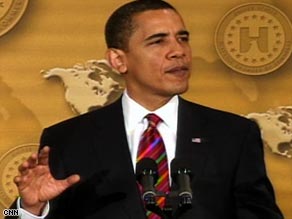
President Obama says the decline of education is "unacceptable for our children."

Obama wants to overhaul education system from 'cradle to career'

WASHINGTON (CNN) -- President Obama began to flesh out the details of one of his signature campaign promises Tuesday, outlining his plan for a major overhaul of the country's education system "from the cradle up through a career."

President Obama says the decline of education is "unacceptable for our children."

"We have let our grades slip, our schools crumble, our teacher quality fall short and other nations outpace us," Obama said in an address to the U.S. Hispanic Chamber of Commerce. "The time for finger-pointing is over. The time for holding ourselves accountable is here."

"The relative decline of American education is untenable for our economy, unsustainable for our democracy and unacceptable for our children, and we cannot afford to let it continue," he said.

The president outlined a five-tier reform plan, starting with increased investments in early childhood initiatives.

Obama noted that the recently passed $787 billion stimulus plan includes an additional $5 billion for Head Start, a program to help low-income families.

He highlighted a proposal to offer 55,000 first-time parents "regular visits from trained nurses to help make sure their children are healthy and prepare them for school and life."

He also pledged to boost federal support in the form of "Early Learning Challenge" grants to states that develop plans to strengthen early education programs.

Second, Obama called for an end to "what has become a race to the bottom in our schools" through lower testing standards. Echoing former President Bush's call to end "the soft bigotry of low expectations," Obama said states needed to stop "low-balling expectations" for students.

"The solution to low test scores is not lower standards; it's tougher, clearer standards," he argued.

At the same time, however, he urged states to develop standards "that don't simply measure whether students can fill in a bubble on a test but whether they possess 21st century skills like problem-solving and critical thinking, entrepreneurship and creativity."

To help promote this goal, Obama said he would push for funding in the No Child Left Behind law to be more effectively tied to results. The Education Department, he said, would "back up this commitment to higher standards with a fund to invest in innovation in our school districts."

Obama's third tier focused on teacher training and recruitment. He noted that federal dollars had been set aside in the stimulus plan to help prevent teacher layoffs. He also reiterated a promise to support merit pay, as well as extra pay for math and science teachers with the goal of ending a shortage in both of those subjects.

At the same time, however, the president warned that ineffective teachers should not be allowed to remain on the job.

"If a teacher is given a chance but still does not improve, there is no excuse for that person to continue teaching," he said. "I reject a system that rewards failure and protects a person from its consequences."

Teachers' unions have opposed merit-based pay, arguing that it is unfair because it leads to competition among teachers and because teachers face different challenges depending on where they are located.

Fourth, Obama called for the promotion of educational "innovation and excellence" by renewing his campaign pledge to support charter schools. He called on states to lift caps on the number of allowable charter schools.

He also urged a longer school calendar.

"I know longer school days and school years are not wildly popular ideas," Obama said. "But the challenges of a new century demand more time in the classroom."

Obama's final reform initiative focused on higher education. Among other things, the president promised to boost college access by raising the maximum Pell Grant award to $5,550 a year and indexing it above inflation. He also promised to push for a $2,500 a year tuition tax credit for students from working families.

The American Federation of Teachers, a union with 1.4 million members, said Tuesday that it embraces Obama's goals to provide "all Americans with a comprehensive, competitive education that begins in early childhood and extends through their careers."

"We also fully support the president's call for shared responsibility for education -- among public officials, school administrators, parents, students and teachers," the group said in a statement.

"As with any public policy, the devil is in the details, and it is important that teachers' voices are heard as we implement the president's vision."

In promoting his program, the president called for an end to the "partisanship and petty bickering" that many observers believe has typically defined education policy debates in the past.

"We need to move beyond the worn fights of the 20th century if we are going to succeed in the 21st century," he said.

Obama also offered a rebuttal to critics who have accused him of diverting attention to issues such as education and energy at the expense of the deteriorating economy.

"I know there are some who believe we can only handle one challenge at a time," he said. But "we don't have the luxury of choosing between getting our economy moving now and rebuilding it over the long term."


Monday, March 9, 2009

MPSC Grant Meeting 3-9-2009

MPSC Grant Development Discussion, Southern Exposure and 21st Century Digital Learning Environments participating partners and supporters for same. Due Friday, March 13, 2009. MORE to come as MSPC Grant-Draft emerges!

Saturday, March 7, 2009

Summary for Michigan Wind Conference 2009

Bauer Power of Grand Rapids shows off a small residential wind generator

Posted: Tuesday, 03 March 2009 5:54PM

Wind Energy Conference Draws 1,300

Around 1,300 people gathered at Detroit's Cobo Center Tuesday for the opening day of the Michigan Wind Energy Conference, sponsored by the Great Lakes Renewable Energy Association.

The conference wraps up today with more keynotes and panels.

Jennifer Alvarado, executive director, said wind power remains a hot technology even in an era of cheaper energy prices because people want to reduce CO2 output, avoid looming carbon taxes -- and because it has the potential to bring thousands of new manufacturing jobs to Michigan.

Attending the event were manufacturers, consultants, attorneys, and developers of both large (utility-scale) and small (home-sized wind systems. A small unit atop a 30-foot flagpole, Alvarado said, in most cases will generate between 30 and 70 percent of a home's needs -- and you can sell excess electricity back to the utility though your meter.

Tuesday's lunch keynote, from Jim Walker of the American Wind Energy Association, noted that moving to 20 percent electricity from wind would cost only 2 percent more of the investment that needs to be made in new power plants and grids anyway, and would be the CO2 equivalent of removing 96 percent of the industrial sector's energy (and pollution) output.

Other tracks Tuesday afternoon covered wind energy supply chains and manufacturing, legal and financial issues, and large-scale commercial wind power.

Dan McDevitt of Nordex Power said 135,000 commercial wind turbines need to be built to get the United States to 20 percent wind power. About 2,400 were build last year, so a lot of building remains to be done.

The event wraps up today with keynotes from wind energy officials from the state of Minnesota and the United Kingdom. There will also be small group discussion tracks on small-scale wind projects, off-shore projects and commercial wind projects.

More at www.glrea.org.


Wind Energy Event Talks Up Offshore Power In Great Lakes


The Michigan Wind Energy Conference wrapped up at Cobo Center Wednesday with a look at offshore wind projects in the United Kingdom and their potential in Michigan, along with breakout sessions on small and community windpower projects.

Chris Jenner and Johnny Lewis of England's RPS Energy offered a comprehensive overview of their company's work on offshore wind power in Europe, specifically the United Kingdom, covering the challenges and successes of the technology.

Peter Mandelstam, founder and president of Bluewater Wind LLC of Delaware, gave a detailed presentation on the potential of offshore wind in the United States, including the Great Lakes.

"Offshore wind is the next wave -- lots of puns, folks, I warn you," Mandelstam began, adding that "the Northeast and the Great Lakes are natural markets."

Why? Because they offer stronger and more consistent winds than other shoreline areas, relatively shallow water depths even miles offshore, no significant water use conflicts, accessible transmission and ports, large available project area footprints, and little opposition from the public if the turbines are built more than 10 miles from shore (which makes them too small to see from the beach, for the most part).

Mandelstam said offshore wind power is a "great green job generator."

He said state and federal regulations, the reality of peak oil production nearing and climate change considerations are all forcing a move toward wind power.

Mandelstam also said those who don't think a carbon tax will happen should beware -- buried deep in the Obama Administration's budgets is the assumption of a $20-a-ton carbon tax by 2015.

Mandelstam said his company's current project off Delaware, Maryland and Virginia will create 500 construction jobs and 80 to 100 permanent operation and maintenance jobs, as well as a $1.6 billion investment.

During the question and answer session, he said there won't be a choice between onshore and offshore wind power -- we'll do both. And he also said the recent economic collapse has shown that neither economic extreme -- complete lassiez-faire and socialism -- works.

After the speeches, the throng broke up into small groups and I headed for the exhibit displays.

Tim Krauss of Fraser's Enmark Tool & Gage Co. Inc. told me he was at the conference looking for work for his company building components for wind generators. A machined part is a machined part, after all.

Bob Brown of Martin-based Bauer Power Inc. showed off a seven-foot circular wind turbine that generates 1,200 watts, intended for rooftop installation on commerical and industrial buildings. Also in display was a 140-watt solar array about the size of a dining room table. Neither is currently cost-competitive with power from the grid, but Brown said they represent "hedging your bets" against future price increases.

Peter Klein, associate dean at Macomb Community College, said he's talking with the industry in an attempt to tailor the school's renewable energy classes to meet industry needs. Every renewable class the school adds quickly fills up, he said.

Finally, I spoke to Mike Hess, co-founder and CEO of Mariah Power, which hopes to put 120 people to work by the end of the year in the Manistee area, building the company's unique vertical-axis wind generators.

Friday, March 6, 2009

Student scientists create biodiesel from soybean oil

A group of students from a charity science program is developing its own biodiesel fuel from soybean oil.
Biodiesel consists of mono alkyl esters produced from vegetable oils, animal or old cooking fats.
Soy biodiesel is made through a chemical process called transesterification whereby the glycerin is separated from the soybean oil. The process gives two products: methyl esters (the chemical name for biodiesel) and glycerin (used to make soap). The use of biodiesel in a conventional diesel engine results in substantial reduction of unburned hydrocarbons, carbon monoxide, and soot.
A group of Ecotek student scientists -- Chris Anderson, Keith Young, Jr. and Emmanuel Thomas Jefferson -- were so interested in the topic that they decided to make their own biodiesel from soybean oil.
They followed a stringent manufacturing and quality control process, such as breaking down the triglycerides in the oil and running combustion, chromatography, and viscosity tests on the methyl ester.
The knowledge that the team gathered from their work in the lab will help them when they travel to the United Nations in New York City to meet with world leaders to discuss the viability of biofuel on behalf of Chad. It will also help them when they share their research with attendees at the Michigan AgriEnergy Conference.
Officials say the team is also working on plans to convert switchgrass, algae and other cellulose based material to biofuel.
Ecotek is a program within the Motor City Model UN Club, a 501c3 organization. It is provides students ages 10 to 17 with the opportunity to work on science projects to help them better understand the role that science plays in policy making within international organizations such as the United Nations.
The students work on a diverse set of projects ranging from combating AIDS to protecting the environment. Once they have reviewed the UN treaties and have completed their lab research, the students meet with world leaders at the UN to share what they have learned.
To learn more about the program and the students highlighted in this press release, contact Keith Young at (313) 399-7893 or email him at keiyoung@ecotek-us.com
The students will show off their work to the public on Friday, March 6 from 4 to 7 p.m. at Ecotek Laboratories, located inside TechTown at 440 Burroughs St., Suite 511 in Detroit.
Note: For information on how you can sponsor content in the Blue Box, contact Jeff Lasser at (248) 455-7319 or jeff.lasser@cbsradio.com

Michigan Wind Energy Conference 3-4-2009


Friday, February 6, 2009

WCS MMSTC Renewable Energy Institute gets Governor Granholm's GREEN-STAMP of Approval!

Granholm's call for renewables offers industry a chance to grow

Gov. Jennifer Granholm's call for a sharp increase in renewable energy production in Michigan is a real economic development opportunity, according to those in the industry.

"I think the renewable energy industry has been trying to grow and develop on its own, and with the support now of the governor, and as we are able to offer incentives, the public will come along," said Jennifer Alvarado, executive director of the Great Lakes Renewable Energy Association. "This is the strategy that the industry needs. I think the state will attract new businesses, especially those in large wind projects and those selling solar panels."

There should also be growth in renewable energy installation and maintenance companies.

The State of the State Address called on goals for 1,000 schools to reduce energy use and supplement electricity use with options like solar and wind electricity.

“By bringing renewable energy systems to our schools, we create an opportunity to educate an entire community and students about alternative energy options,” added Alvarado.

State officials already passed legislation last year that 10 percent of the state's electricity sold must come from renewable sources.

Tuesday, Granholm called for a “45 by '20” plan, for Michigan to pursue a 45 percent reduction in fossil fuel use for generating electricity by the year 2020. NextEnergy, the state's alternative energy accelerator, said Wednesday that Michigan spends $2 billion a year importing coal from other states and that coal supplies Michigan with 80 percent of the its electricity currently.

Rodger A. Kershner, an attorney at Howard & Howard in Royal Oak with a long practice in the energy industry, said that plan amounts to "a backwards way" of boosting that 10 percent of renewable power to 20 percent by 2020. Kershner said that with a new nuclear plant for Detroit Edison and a sharp increase in wind power, the 45 percent could be reached -- and in so doing, renewables boosted to 20 percent.

Will Granholm get the plan approved? "I don't know," Kershner said. "Industry won't like it. Republicans won't like it. But she has dressed it up in a 'This is the way out of our financial woes' clothing, and it is exciting."

Fellow Howard & Howard attorney Jon D. Kreucher said there's also movement toward a serious energy efficiency effort in state schools, and schools "seem to be pretty high value targets in terms of driving down demand by increasing efficiency."

NextEnergy released a statement Wednesday supporting Granholm’s proposal.

THINK: EduWood Digital Learning Studios!

Hollywood comes to Oakland

The Oakland Press/TIM THOMPSON A building in the General Motors Centerpoint complex in Pontiac, which will be the site of a $70 million movie studio with nine sound stages.

Wednesday, February 4, 2009 11:40 AM EST

By CHARLES CRUMM and RANDAL YAKEY
Of The Oakland Press

Founders of a movie studio planned for Pontiac want to be making movies within 90 days. That’s a realistic goal, says county Executive L. Brooks Patterson.

The movie studio initiative was the high point of Patterson’s State of the County address Tuesday in Troy. Gov. Jennifer Granholm was supposed to make the same announcement at the same time in her State of the State address to the Legislature. Patterson blamed the governor for leaking news about the studio a day before the concurrent speeches. “The governor got so excited about the news — you remember she lived in Hollywood for awhile — she couldn’t contain her girlish enthusiasm and let the cat out of the bag,” Patterson said.

Patterson is among a halfdozen Republicans considering a run for governor when the term-limited Granholm leaves office in 2010.

But all agree the studio is certain to generate much-needed jobs.

“It’s good news — it’s going to be 3,600 jobs,” Patterson said Tuesday.

The local investors in the new studio are Oakland County developers A. Alfred Taubman, Gary Sakwa of Grand Sakwa Properties in Farmington Hills and Linden Nelson of Nelson Ventures in Birmingham. They’re teaming up with Raleigh Studios of Hollywood, Calif., and Endeavor Talent Agency of Beverly Hills, Calif.

“They’re the real deal,” state Rep. Tim Melton, D-Auburn Hills, said of Raleigh and Endeavor. Melton’s district includes Pontiac.

The Michigan Economic Growth Authority also is putting up money for the venture, the reason it was included in both Patterson and Granholm’s speeches.

The new venture, called Motown Motion Pictures LLC and currently based in Birmingham, will include both a film studio and production company.

The investors plan to spend $70 million for a 600,000-square-foot development, including nine sound stages located inside General Motors’ former Centerpoint truck plant at South Boulevard and Opdyke Road in Pontiac.

The state’s growth authority expects the studio to create 3,600 direct jobs and another 1,500 indirect jobs by the year 2020 with an average weekly wage of $824.

The authority on Tuesday approved a state tax credit valued at $101 million over 12 years. The project also will receive $12 million in state incentives along with job training assistance through the Michigan Economic Development Corporation.

Also receiving assistance from the authority are two other film industry businesses — one to be based in Plymouth and one in Detroit.

Michigan currently has the most favorable tax incentives for the film industry in the country.

Movie studio a definite among many ‘maybes’


Thursday, February 5, 2009 6:08 AM EST

By The Oakland Press

Amid all of the promises and glowing predictions we heard Tuesday night from both Gov. Jennifer Granholm and Oakland County Executive L. Brooks Patterson, there was at least one bit of very good, defi nite news.

In their state of the state and state of the county addresses, we were informed of the establishment of a movie studio in Pontiac. Motown Motion Pictures will invest $70 million to build its new film studios at a former General Motors plant.

Granholm noted that Pontiac’s studio was one of three projects coming to Michigan to boost its ongoing efforts to attract Hollywood filmmakers to the state. The governor noted that Wonderstruck Animation Studios will invest $86 million to build a new studio in Detroit and Stardock Systems, a digital gaming manufacturer, will build its production facilities in Plymouth.

The local investors in the Motown studio are Oakland County developers A. Alfred Taubman, Gary Sakwa of Grand Sakwa Properties in Farmington Hills and Linden Nelson of Nelson Ventures in Birmingham. They’re teaming up with Raleigh Studios of Hollywood, Calif., and Endeavor Talent Agency of Beverly Hills, Calif.

The Michigan Economic Growth Authority also is putting up money for the venture.

Motown Motion Pictures LLC is based in Birmingham and will include both a film studio and production company.

The investors plan to spend $70 million for a 600,000-square-foot development, including nine sound stages located inside General Motors’ former Centerpoint truck plant at South Boulevard and Opdyke Road in Pontiac.

The state’s growth authority expects the studio to create 3,600 direct jobs and another 1,500 indirect jobs by the year 2020 with an average weekly wage of $824.

The authority has approved a state tax credit valued at $101 million over 12 years. The project also will receive $12 million in state incentives along with job training assistance through the Michigan Economic Development Corporation.

However, tax revenue for Pontiac is expected to be anywhere from $1.4 to $2.8 million annually, according to city officials. The state expects its tax revenues to be $178 million by 2020.

Patterson even mentioned the county was in the early stages of its first-ever film festival, possibly coming in 2010.

In speeches that made a lot of promises, it was good hear about some real, concrete projects coming to Oakland County and the state.

We commend Patterson, Granholm, the Pontiac mayor’s office as well as other local and state officials for their efforts in securing this project.

Generally, Granholm painted a beautifully bright future for Michigan.

Of course, she had to do something positive because with the highest unemployment in the nation and an economy that is reeling, gloomy doesn’t even do justice as a description.

Meanwhile, Patterson also did some painting. As usual, he focused on the county’s accomplishments.

Patterson, among other things, noted that Automation Alley, on the strength of a 17-percent increase in membership last year, has hit the magical 1,000 membership mark. He also said that 106 Emerging Sectors companies have either located in Oakland County or expanded here over the past four years, resulting in $1.3 billion in new investment and the creation of 14,762 new jobs.

The picture Granholm crafted certainly sounded good. She plans to shrink state government and balance Michigan’s budget while creating more jobs through diversification of the state’s industries.

Obviously, the devil is in the details.

Will the state balance the budget through some type of tax increases on the backs of businesses and individuals? Will Granholm remember that whatever federal stimulus funds the state receives will be a one-time shot, so they need to supplement Michigan’s finances, not just prop them up for one more year. We certainly can’t argue with anything Granholm and Patterson said. We hope their visions come true.

But just how realistic are they? Historically, we would predict that Patterson’s projections are more accurate because Oakland County has continually led the way in fiscal responsibility and acumen.

Time will tell.

We’ll get a glimpse of Granholm’s plans to finance her visions when she presents her budget next week.

But no matter how successful Granholm and Patterson are in their programs, one thing is certain: For the time being, we’re all in for a bumpy ride, so hang on.

Monday, February 2, 2009

EDUCATION Going Green?

Posted: Sunday, 01 February 2009 1:19PM

New Jersey Group Backs Brighton Firm's School Wind Energy Plan

The New Jersey Higher Education Partnership for Sustainability has signed a letter to President Barack Obama endorsing the Project EverGreen Schools program being promoted by Partners Green, a Brighton wind energy group.

Partners Green launched a petition that seeks a national energy policy consistent with President Obama's plan for renewable energy and education at our nation's schools. Partners Green has asked all parties to sign on to its “Letter to President Obama” before delivering the letter on Feb. 26.

“We welcome the opportunity to join Partners Green effort to raise awareness of this important issue and to inform our 47 New Jersey member higher education institutions," said John Cusack, executive director for the New Jersey partnership, adding that its membership "believes that the Project EverGreen Schools program effort should be an important and key part of the economic stimulus package of the new administration. The program meets higher education's need for renewable energy to reduce energy price volatility and reduce campus greenhouse gas emissions, creates clean sustainable jobs for the economy and our school's graduates, and helps colleges and universities fulfill their educational mission by having examples of renewable energy projects on their campuses for hands-on teaching purposes."

Project EverGreen involves installing vertical-axis wind turbines at school sites, both to produce green power and as a living energy laboratory on which students can work.

Said Kevin Cook, president of the Partners Green board: “The NJHEPS endorsement, along with many others across the country, of our 'Say Yes to Green Schools' petition and 'Letter to President Obama' is leading a groundswell of support for the Project EverGreen Schoold program."

For more information, contact Cusack at jcusack@njheps.org or visit www.cleangreenenergyllc.com.